
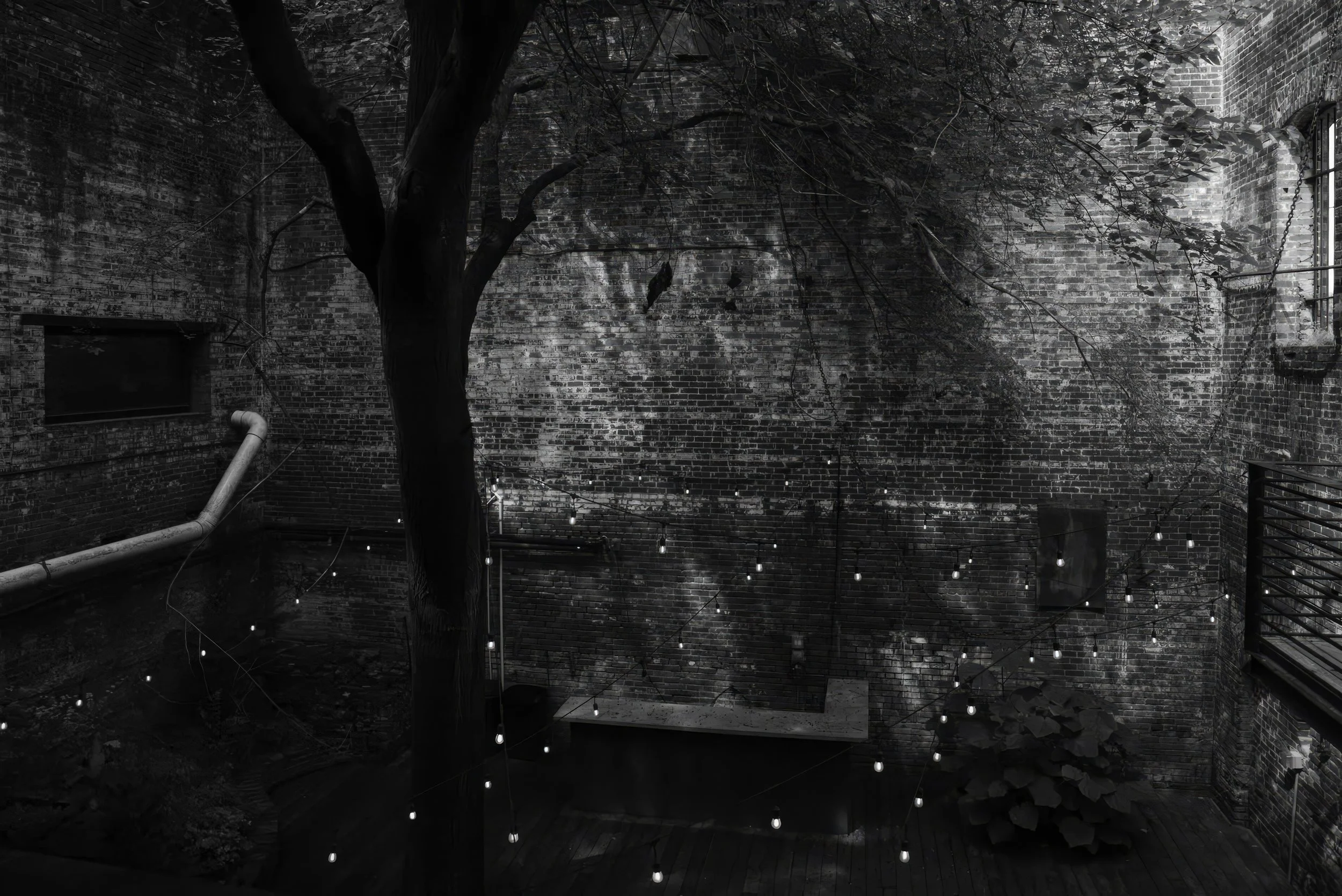
What a Place Carries
Psychological Landscapes in Athens
Text by Lee Matney
Places can become significant without being conventionally picturesque or historically prominent. A tree, a fallen log, an opening in a wall, or the way vegetation occupies a piece of ground can begin to register differently through intuition and attention. These kinds of encounters have become part of John Lee Matney’s ongoing Psychological Landscapes series.
A group of photographs within the series developed through places connected to Douglas and Ashley Booher in Athens, Georgia. Earlier works, including Ghost Tree and another landscape centered on a fallen log, were made at the Boohers’ residence and on the surrounding grounds. More recently, Matney photographed the Tree Room for the first time, extending concerns already present in the earlier work into a very different architectural setting.
Made at different times, the photographs share a way of looking. Natural forms, built space, growth, and decay appear in different relationships, but each photograph begins with something that might easily be passed over. Through attention, an ordinary element can begin to organize the surrounding space or suggest relationships that were not immediately apparent.
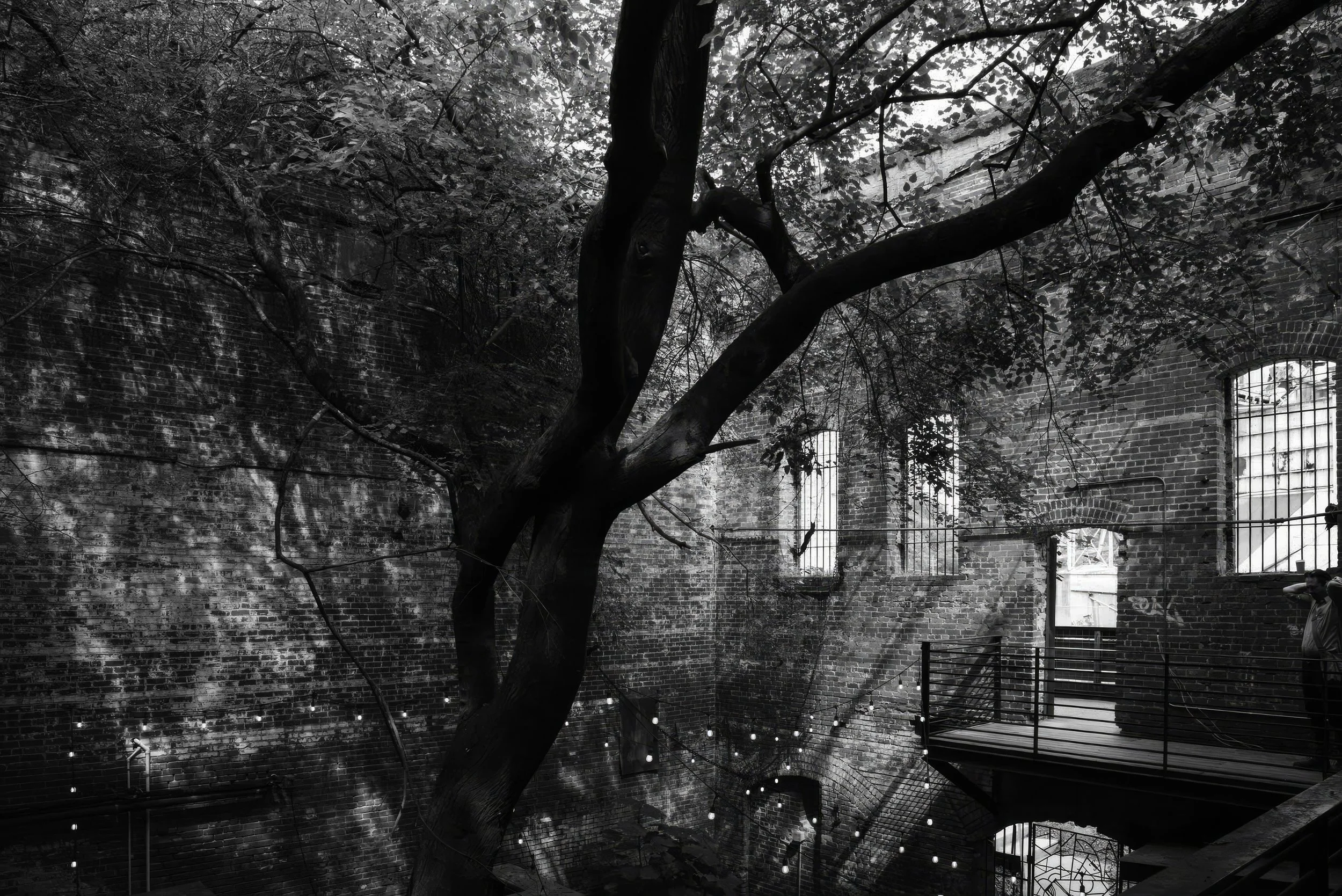
The Tree Room, Athens, Georgia, 2026
Archival pigment print
16 × 24 in | 40.6 × 61 cm
Edition of 10, VIEW ON ARTSY
The Tree Room brings this kind of looking into especially clear view. Located at 159 Oneta Street in Athens, it occupies a structure Douglas and Ashley Booher date to the late nineteenth or early twentieth century. Their account of its history carefully distinguishes surviving evidence from speculation concerning the building’s original industrial uses. Over time, much of the interior structure disappeared, leaving masonry walls open to the elements while a mulberry tree grew within them. Architecture and vegetation gradually became inseparable.
When the Boohers acquired the building, many of its openings were still enclosed and light entered through the canopy of the tree. Rather than clearing away what time had produced, they chose to preserve the unusual relationship between the structure and the living tree. The Tree Room subsequently became an active gathering and event space while retaining the qualities that first distinguished it.
Douglas Booher is an entomologist whose work in ecology, biodiversity, and taxonomy forms another dimension of his sustained engagement with natural systems.
Matney’s photographs attend to the visual relationships already present there. Openings in the masonry frame branches and sky. Shadows alter the surfaces of the walls. Vegetation moves through spaces originally made for other purposes. Looking from one position and then another changes the balance between architecture and landscape, and with it the relationship among the tree, the walls, and the surrounding space.
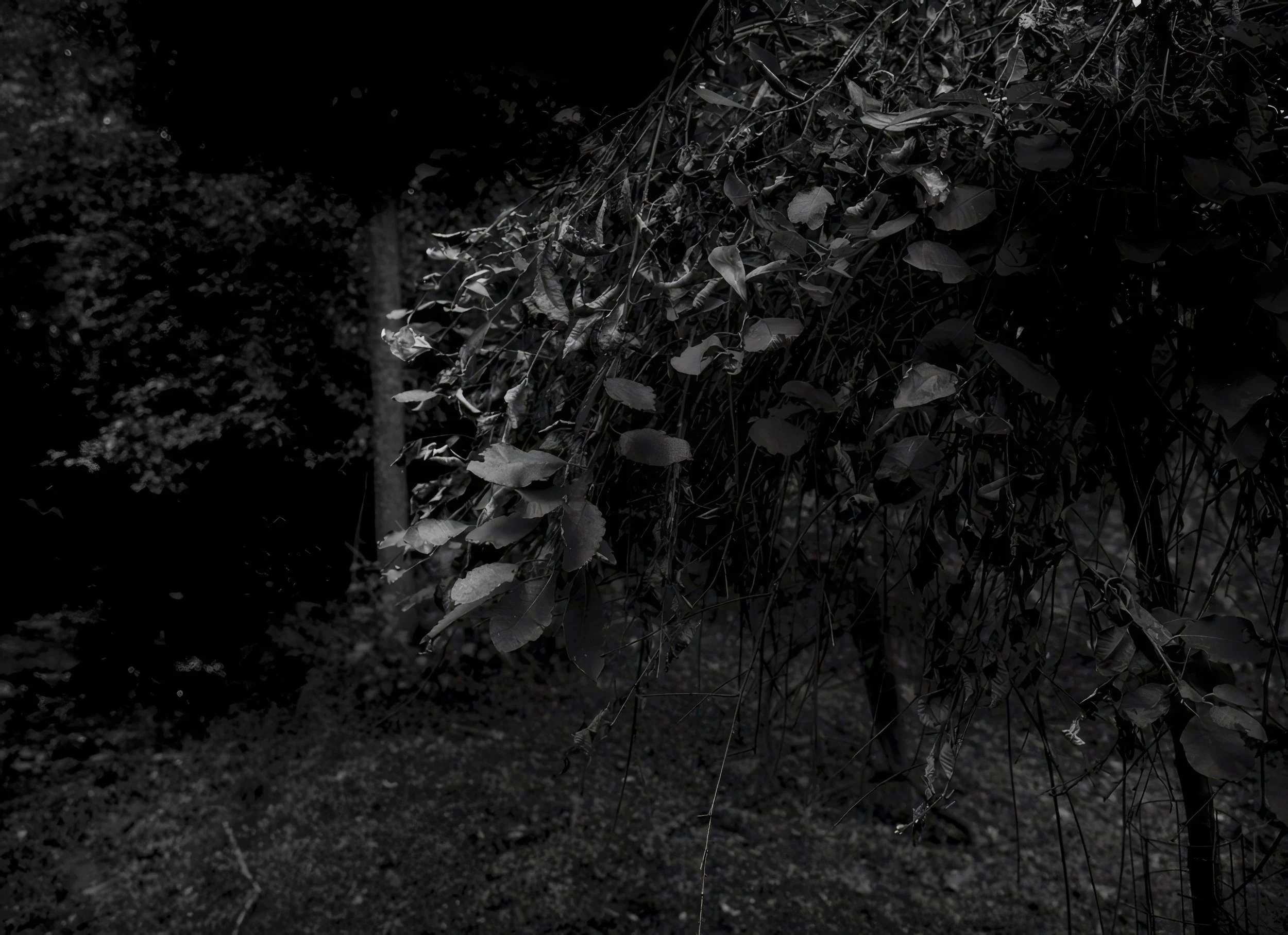
Related qualities had appeared earlier in photographs made on the grounds around Doug and Ashley’s home. In Ghost Tree, close attention to the landscape allows something familiar to become less certain. What remains visible before the viewer can also open toward memory and association without resolving either.
Another photograph focuses on a fallen log. Its subject is modest, but attention changes its role within the landscape. The horizontal weight of the wood begins to organize the surrounding ground, vegetation, and distance. Something that could be regarded simply as debris becomes a structure through which the rest of the photograph can be read.
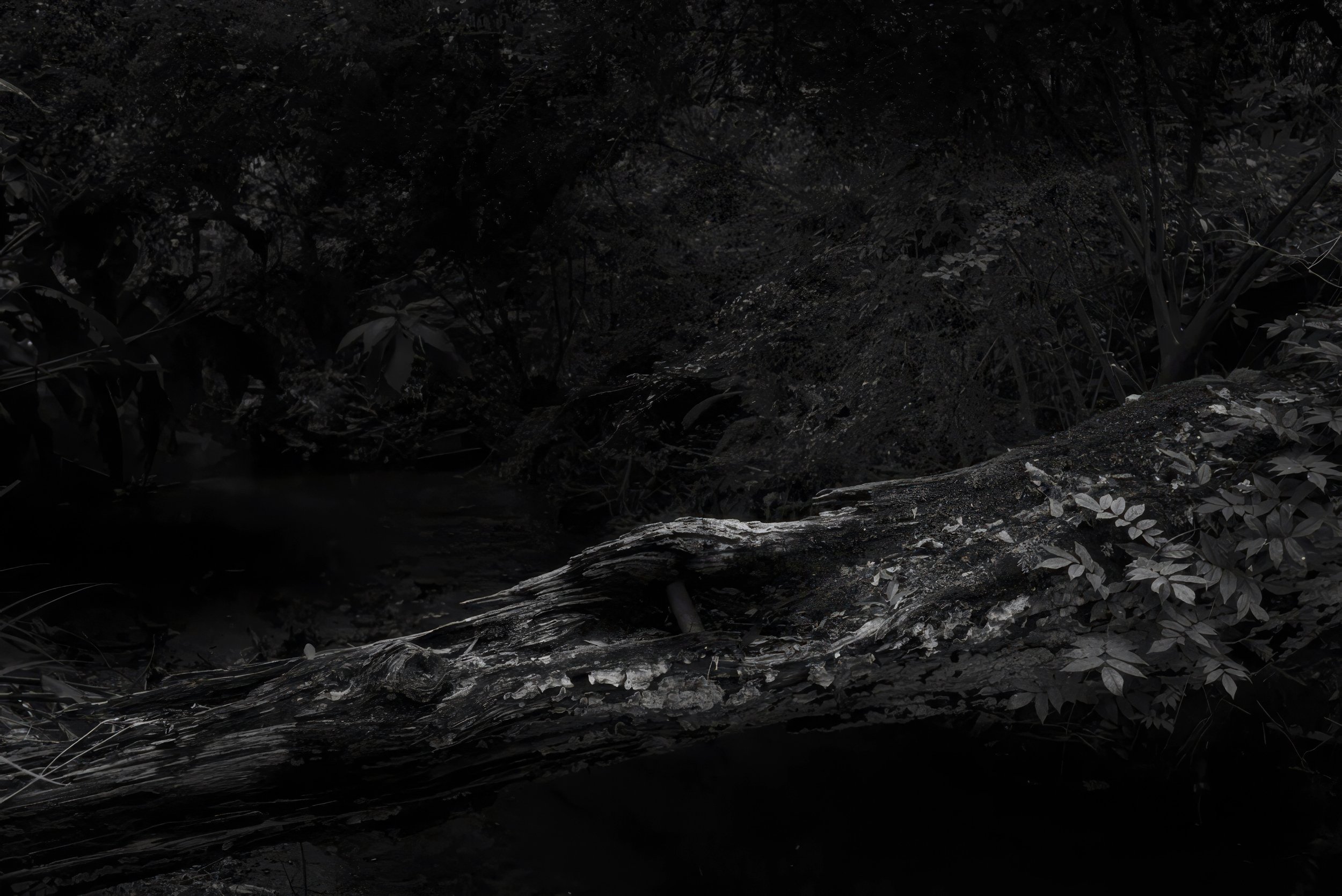
The earlier photographs and the more recent Tree Room images are connected by this practice of looking. A tree may be encountered as living architecture, as a fallen form, or as a suggestion within the landscape. The camera does not need to transform these things into symbols. Its role is closer to isolating relationships that become visible through attention.
Uncertainty remains central to Psychological Landscapes. The photographs often begin with an intuitive response to a place, object, or arrangement of forms. Sometimes that response develops through returning to a subject; at other times, it arrives in a split second. The psychological quality of the photographs emerges in the space between intuition, observation, and what remains unresolved.
The Tree Room makes this particularly apparent because the site resists a single reading. It can be understood as architecture, landscape, architectural remnant, or living environment, yet the balance among those readings continually shifts. Preservation has allowed those relationships to remain visible: masonry exposed to weather, vegetation moving through architecture, and a living tree continuing to alter the space around it.
Photography introduces another level of attention by placing boundaries around the encounter. The frame does not explain the landscape; it selects from it. A branch, opening, shadow, or fallen form may become more consequential simply because the photograph separates it from the continuity of the surrounding place.
The photographs made on and around the Boohers’ properties form a small geography within the larger series. Ghost Tree, the fallen log landscape, and the Tree Room photographs emerged at different moments, yet each began with the recognition that something within an otherwise familiar place warranted attention.
A psychological landscape develops in that interval. The terrain remains what it is, but the act of photographing can make relationships, traces of change, and associations more visible without requiring them to be resolved.
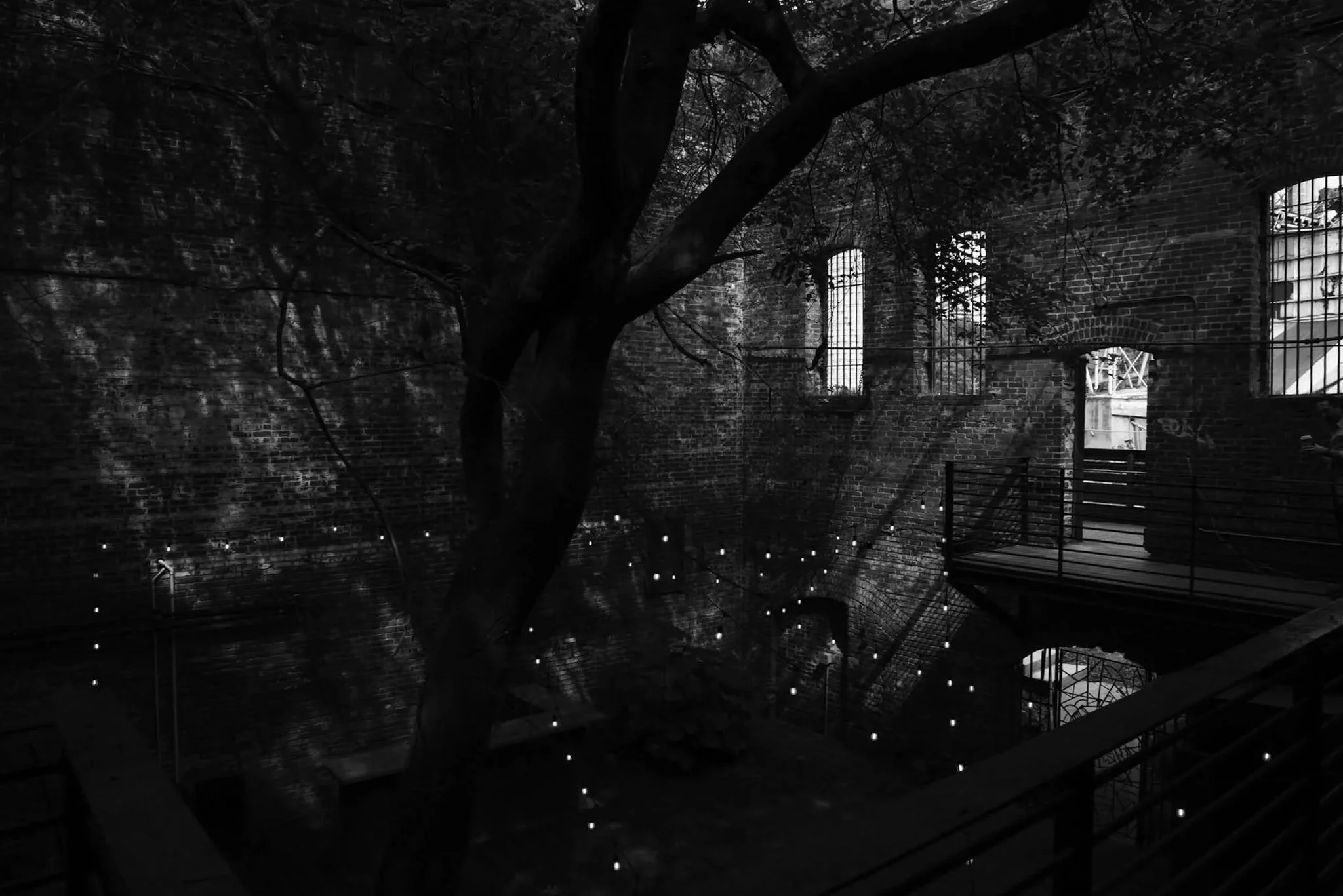
The Tree Room, Athens, Georgia, 2026
Archival pigment print
16 × 24 in | 40.6 × 61 cm
Edition of 10