
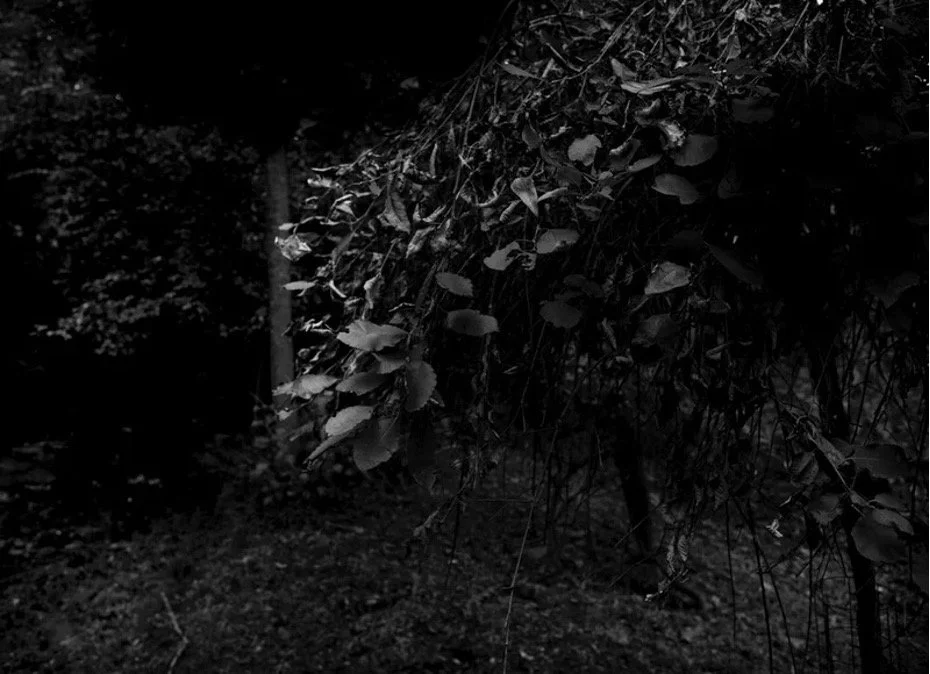
John Lee Matney: Psychological Landscapes
Photography, memory, and the psychological experience of place
John Lee Matney’s photographs begin with place, but they are rarely simply about where they were made.
Moving through Virginia, Georgia, New Jersey, and other locations connected to personal experience, Matney photographs environments that seem suspended between recognition and uncertainty. Rooftops, trees, roads, architecture, interiors, and fragments of the built landscape become less documentary subjects than points of entry into memory.
For Matney, photography has long existed alongside his work as a curator. The two practices share an interest in looking closely, yet the photographs increasingly occupy a territory of their own. Rather than documenting exhibitions, artists, or cultural histories, the photographs focus on the experience of seeing: how an ordinary place can become unfamiliar through attention, framing, and the camera.
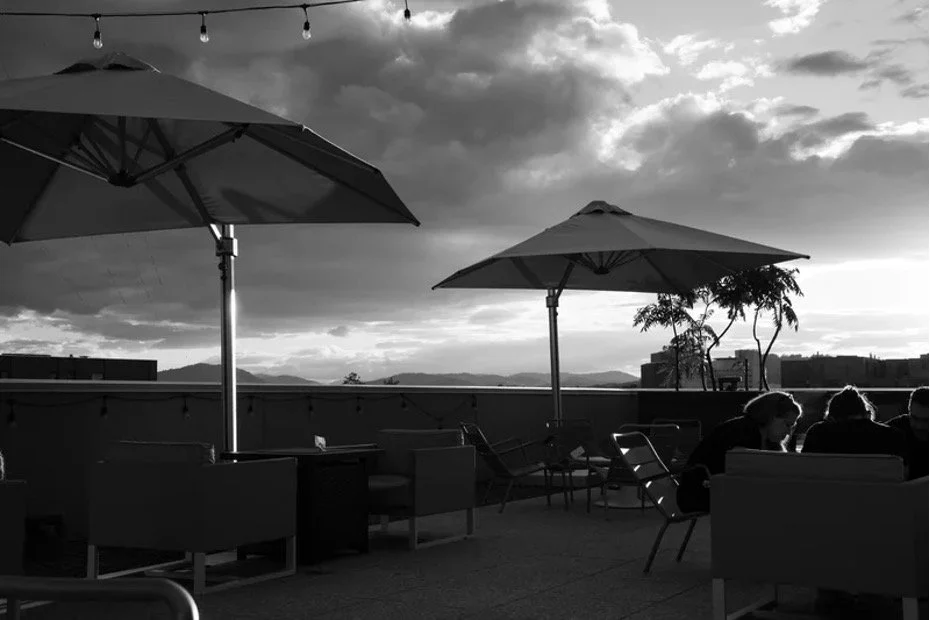
John Lee Matney, Charlottesville VA, 2025. Archival pigment print.
This is particularly evident in photographs made in and around Athens, Georgia, a city connected to Matney’s formative years and to a cultural history that has frequently appeared in his work. Earlier photographs could be read through those associations. The newer work resists that linear interpretation.
A landscape does not need to explain what happened there.
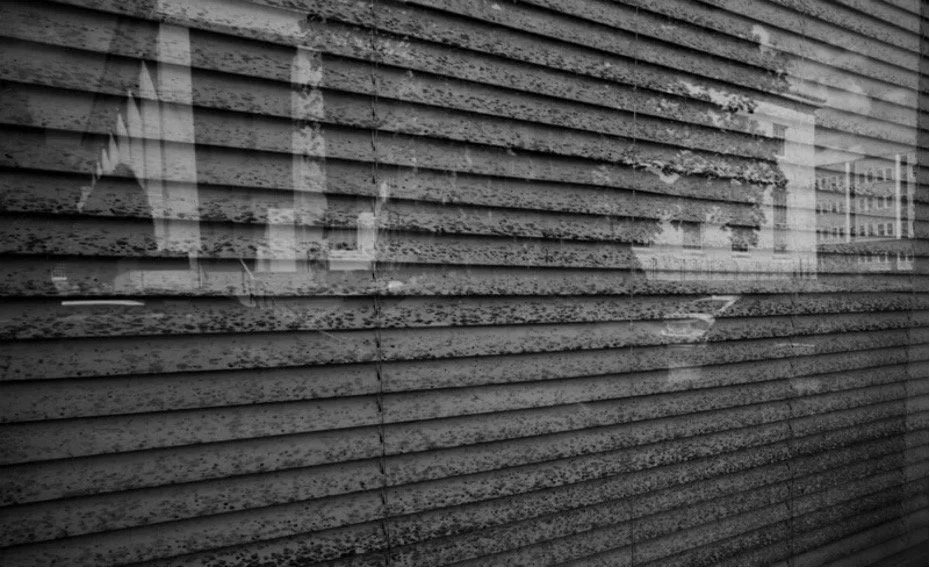
John Lee Matney, Blinds, Athens GA, 2025. Archival pigment print.
Instead, Matney allows cultural history to remain peripheral—a trace rather than a subject. Familiar locations can carry personal, artistic, and historical associations without becoming illustrations of those histories. The photograph is asked to stand independently.
That shift has opened the work considerably.
Recent images move between intimacy and distance. Human figures may disappear entirely, while signs of human presence remain: a structure partially obscured by vegetation, an unexpected opening through trees, the geometry of a roof, a seemingly ordinary space transformed by light or framing.
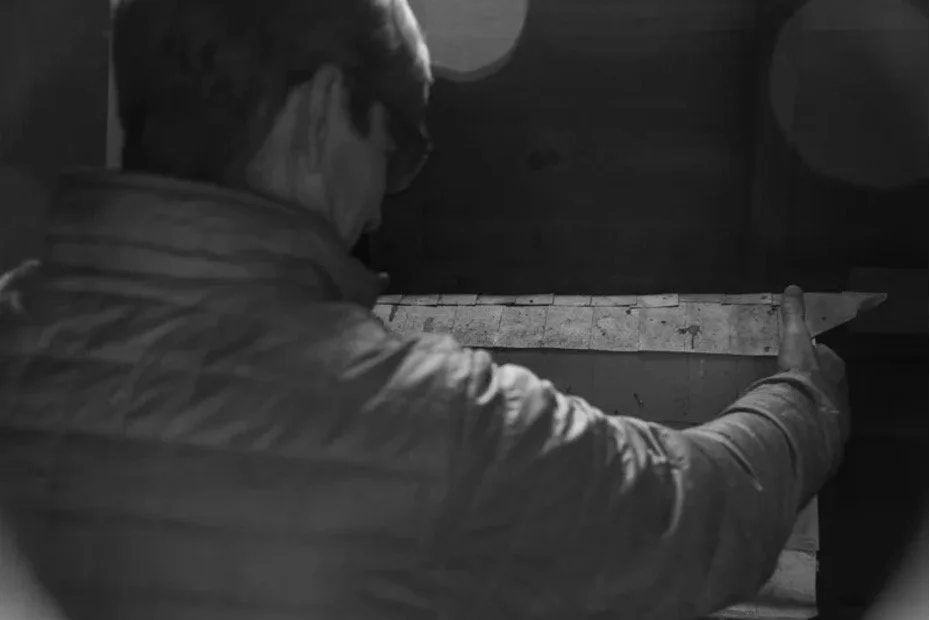
John Lee Matney, The Box, 2025. Archival pigment print.
There is often a feeling that something has just happened—or is about to.
Matney describes these works as psychological landscapes. The term is useful because it places perception ahead of geography. The camera records an actual place, but the resulting image operates somewhere between observation, recollection, and projection.
The photographs do not prescribe a narrative. Their ambiguity is intentional.
This also separates the work from nostalgia. Although memory is important, Matney is not attempting to reconstruct an earlier South or recover a lost cultural moment. Past and present coexist more uneasily. A place may be personally charged while appearing completely anonymous to another viewer.
That tension gives the photographs their independence.
In this sense, Matney’s photographic practice parallels a larger interest within his curatorial work: artists who allow meaning to accumulate rather than announce itself immediately. Material, atmosphere, history, and personal experience can coexist without being resolved into a single explanation.
The photographs ask for the same kind of looking.
What initially appears to be a landscape may gradually become something closer to a portrait—not necessarily of a person, but of an encounter with place.
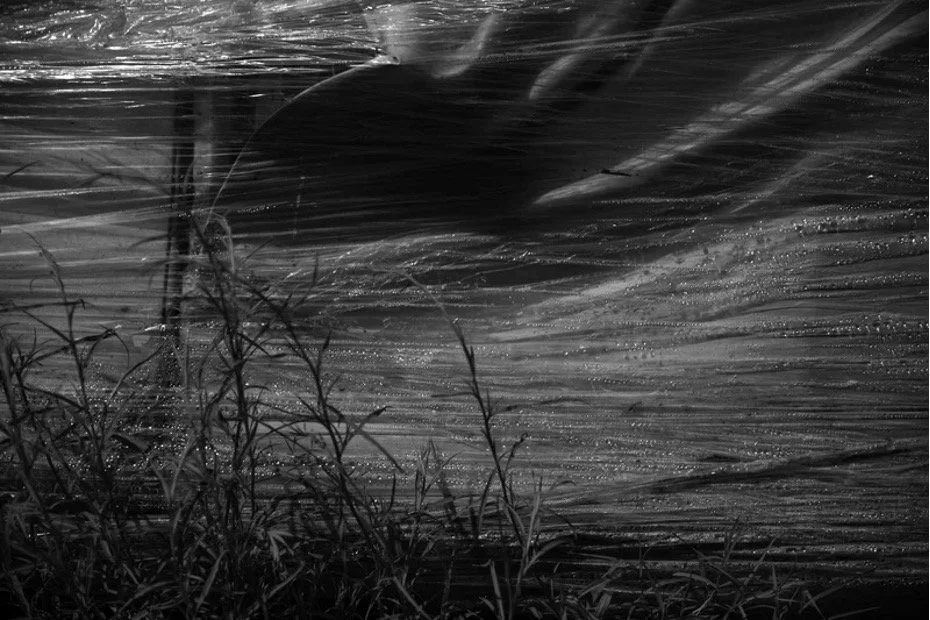
John Lee Matney, Excavation IV, 2026. Archival pigment print.
And increasingly, that may be the central subject of the work: not the history that occurred in these locations, but what remains psychologically present after the history has moved on.
A selection of John Lee Matney’s photography is available through Matney Gallery on Artsy.