
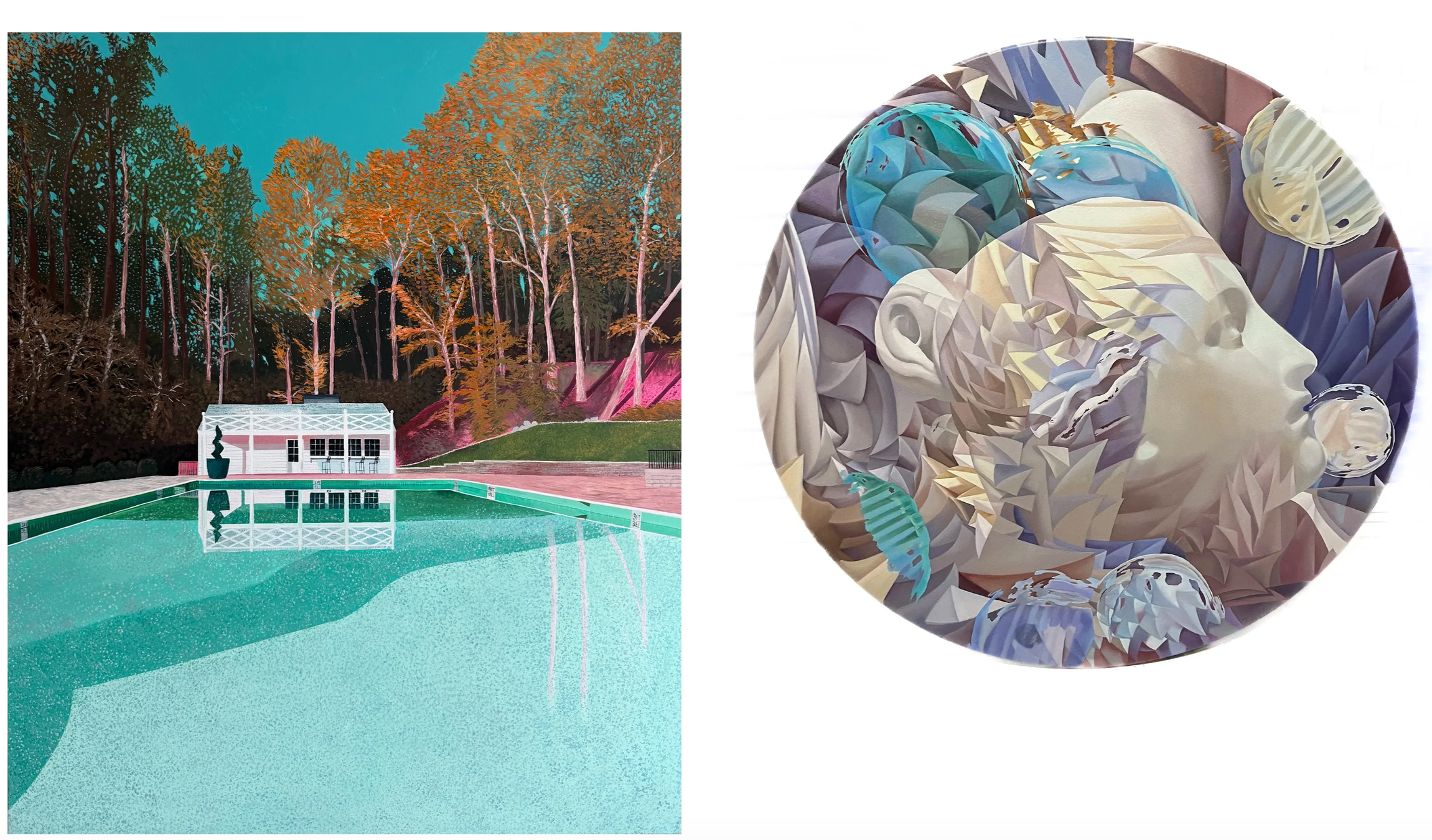
Olga Tobreluts, Ivan Plusch, Mia Katrina Guile, and Dennis Harper in Matney Gallery’s 2026 Summer Salon
Four distinct practices move across historical imagery, digital construction, psychological space, and material inquiry.
Matney Gallery’s 2026 Summer Salon brings together painting, photography, sculpture, mixed media, and works shaped by film and digital culture. Taking the exhibition as a point of departure, this article considers the broader practices of Olga Tobreluts, Ivan Plusch, Mia Katrina Guile, and Dennis Harper, drawing connections between works currently on view and related works developed across their careers.
The Salon was introduced through an invitation featuring Jean-Daniel Lorieux’s interpretation of the Chanel No. 5 perfume bottle. The image connected the exhibition to Lorieux’s distinctive visual world of fashion, luxury, photography, and constructed fantasy. Within the gallery, the exhibition expands beyond that initial image, bringing together artists whose works approach history, perception, material, and contemporary image culture through markedly different methods.
Tobreluts, Plusch, Guile, and Harper differ in scale, subject, medium, generation, and cultural context. Considered together, their practices reveal the continuing adaptability of painting and the constructed image as means of addressing historical memory, narrative uncertainty, atmosphere, technological change, and the physical experience of looking.
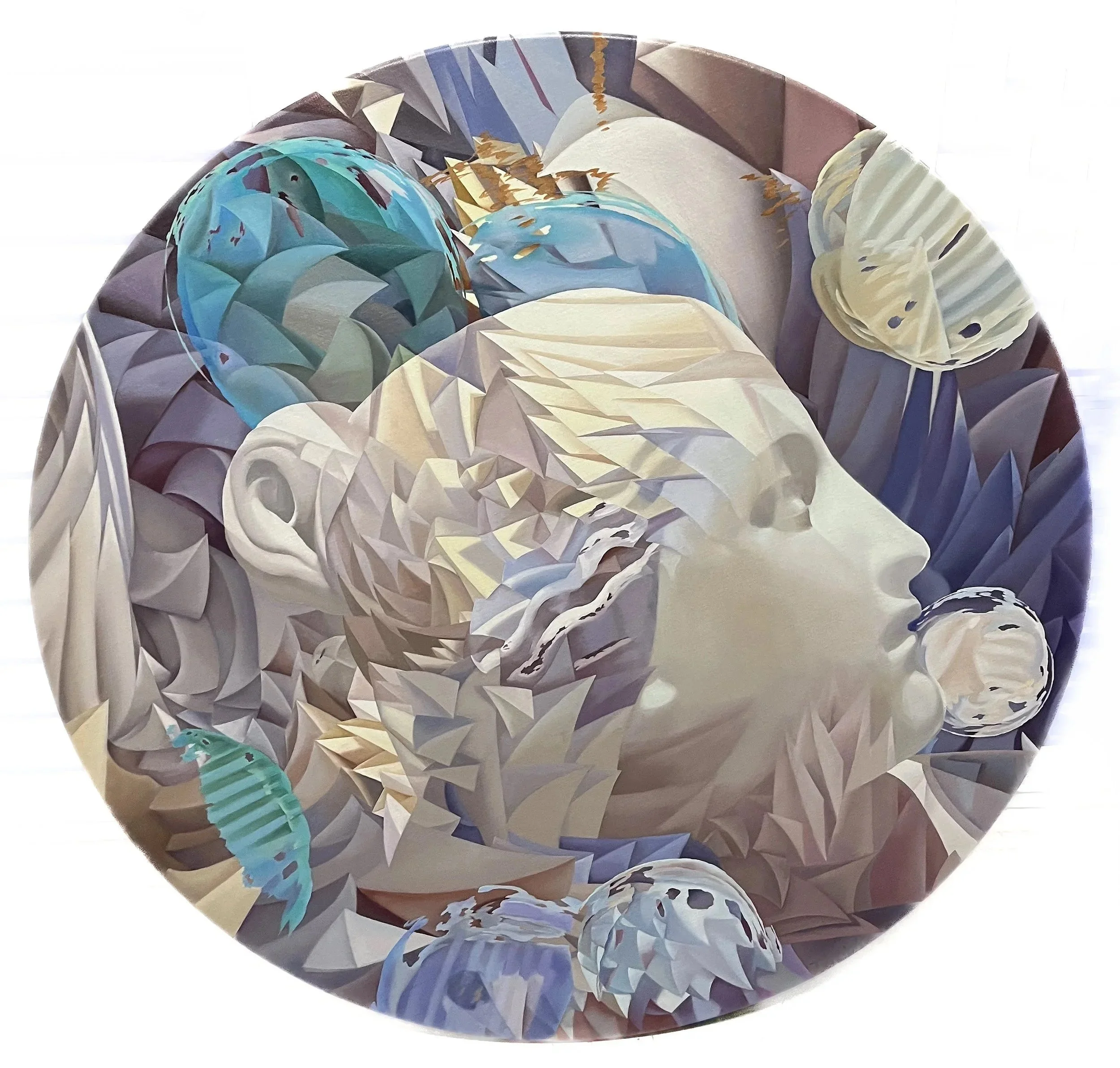
Olga Tobreluts, Diana, 2022, oil on canvas, 39 inches diameter, CONTACT THE GALLERY
OLGA TOBRELUTS
Olga Tobreluts brings an international perspective and a sustained engagement with art history to the Summer Salon. Her practice draws upon classical mythology, Renaissance painting, photography, digital processes, lenticular technology, and contemporary visual culture, producing images that move between historical reference, technological construction, and physical transformation.
The lenticular works displayed prominently in the Salon demonstrate the importance of movement and changing perception within her practice. As viewers shift their position in relation to the surface, figures, symbols, and environments emerge, recede, and transform. The works resist a single fixed appearance, making the viewer’s movement an essential part of the visual experience.
Tobreluts does not approach classical imagery as remote or static. Through technological processes, inherited forms become responsive to viewpoint, reproduction, and contemporary cultural memory. Although digitally developed, the lenticular works require a physical encounter: their changing visual effect cannot be fully communicated through a single photographic reproduction.
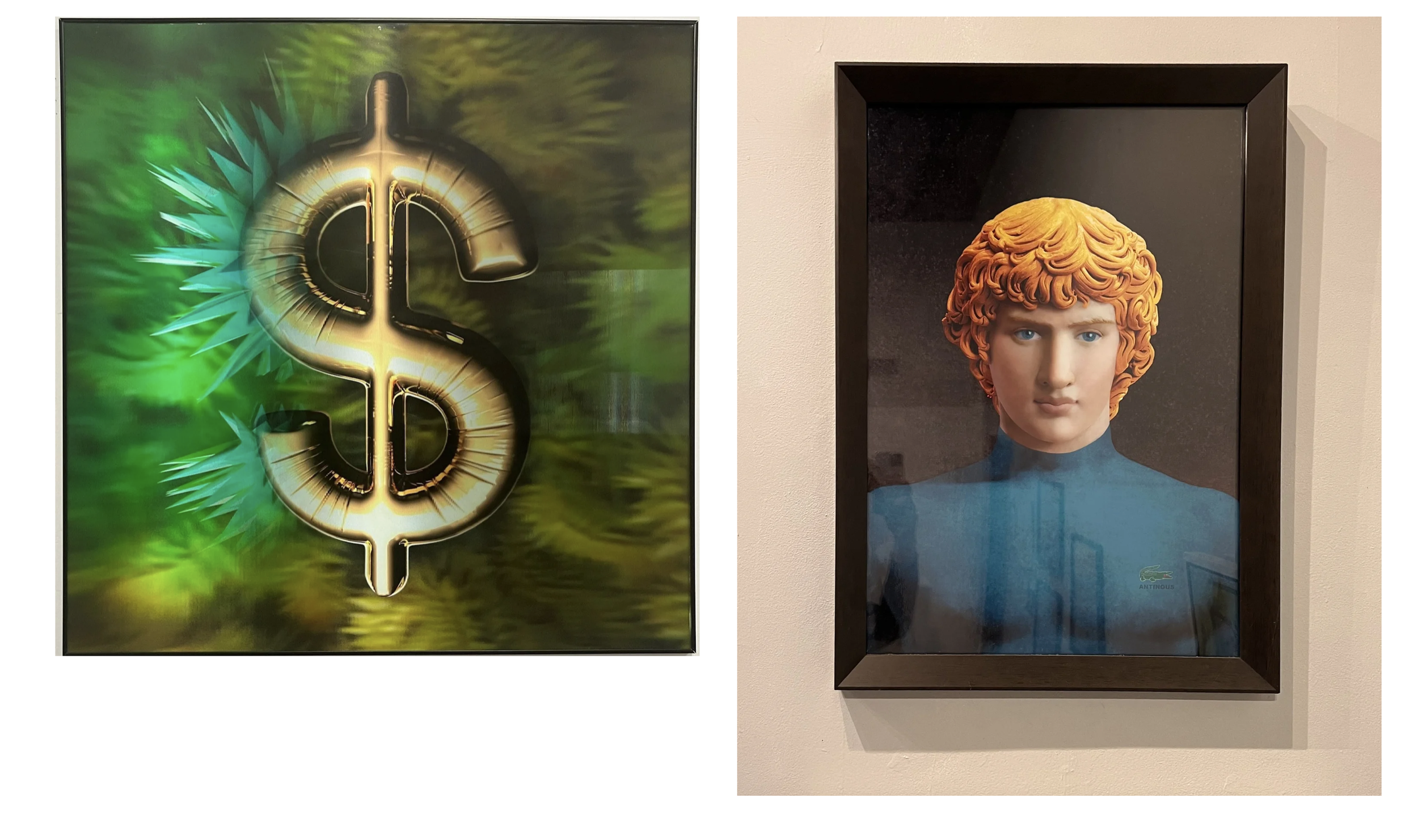
Pictured, left to right: Olga Tobreluts, Dollar, lenticular work; Antinous, 2012, Kodak Metallic print, edition 1 of 5, 26 × 21 inches. CONTACT THE GALLERY
These works form part of a much longer engagement with digital culture. Matney Gallery also holds works associated with Tobreluts’s presentation in InterNyet, The Museum of Modern Art’s 1998 online project examining emerging internet and digital culture in Russia.
The MoMA presentation documents Tobreluts at a formative point in her career, when she was using digital technology to bring figures from antiquity into dialogue with contemporary bodies and image culture. It provides an important historical context for understanding the technological construction, mutable imagery, and transformed identities that continue across her practice.
Her engagement with these concerns is therefore not a recent departure. It extends back to the emergence of digital art during the 1990s and continues across distinct bodies of work developed in multiple media.
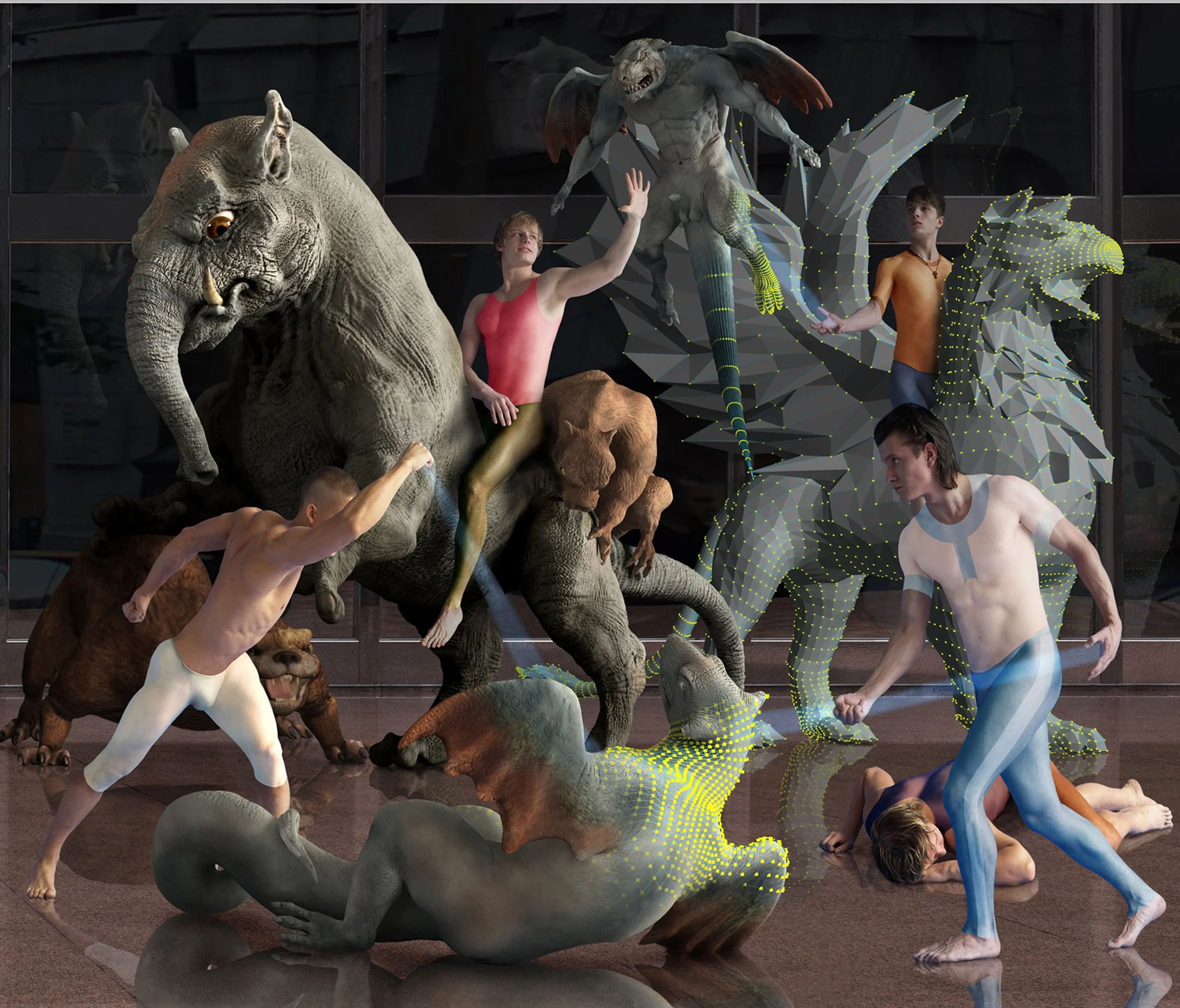
Olga Tobreluts, Modernization II, 2002 (printed 2012), Kodak Metallic print, 47.2 × 55.1 inches (119.9 × 140 cm). CONTACT THE GALLERY
In Modernization II, male figures and animals inhabit an elaborate digitally constructed environment in which classical associations, contemporary bodies, theatrical staging, and technological image-making converge.
Although Modernization II is not part of the current installation, it provides valuable context for the works on view. Its scene belongs securely to neither antiquity nor the present. Historical distance collapses as inherited visual forms are reorganized within a deliberately artificial world.
Tobreluts’s circular oil painting Diana introduces another dimension of the same inquiry. Its tondo format recalls Renaissance and classical traditions, while the monumental figure and controlled surface give the image a distinctly contemporary presence. The painting carries questions of mythology, idealization, and visual culture into the physical surface and material history of oil painting.
Seen together, the lenticular works, the work associated with MoMA’s 1998 InterNyet project, Modernization II, and Diana demonstrate the continuity between Tobreluts’s digital and painted imagery. Across different media and distinct series, she returns to the classical body and to the ways historical forms circulate through museums, cinema, fashion, advertising, and digital culture.
Technology is not simply a method of producing an image within Tobreluts’s practice. It becomes a means of examining how history is reconstructed, idealized, transformed, and consumed. Her paintings extend related questions through the material presence, scale, and historical associations of the painted surface.
The works presented in the Summer Salon, together with related examples from Tobreluts’s broader career, offer several points of entry into a practice developed across decades, media, and distinct bodies of work. Together, they reveal the continuity of her engagement with technology, idealization, movement, historical memory, and the changing nature of the image.
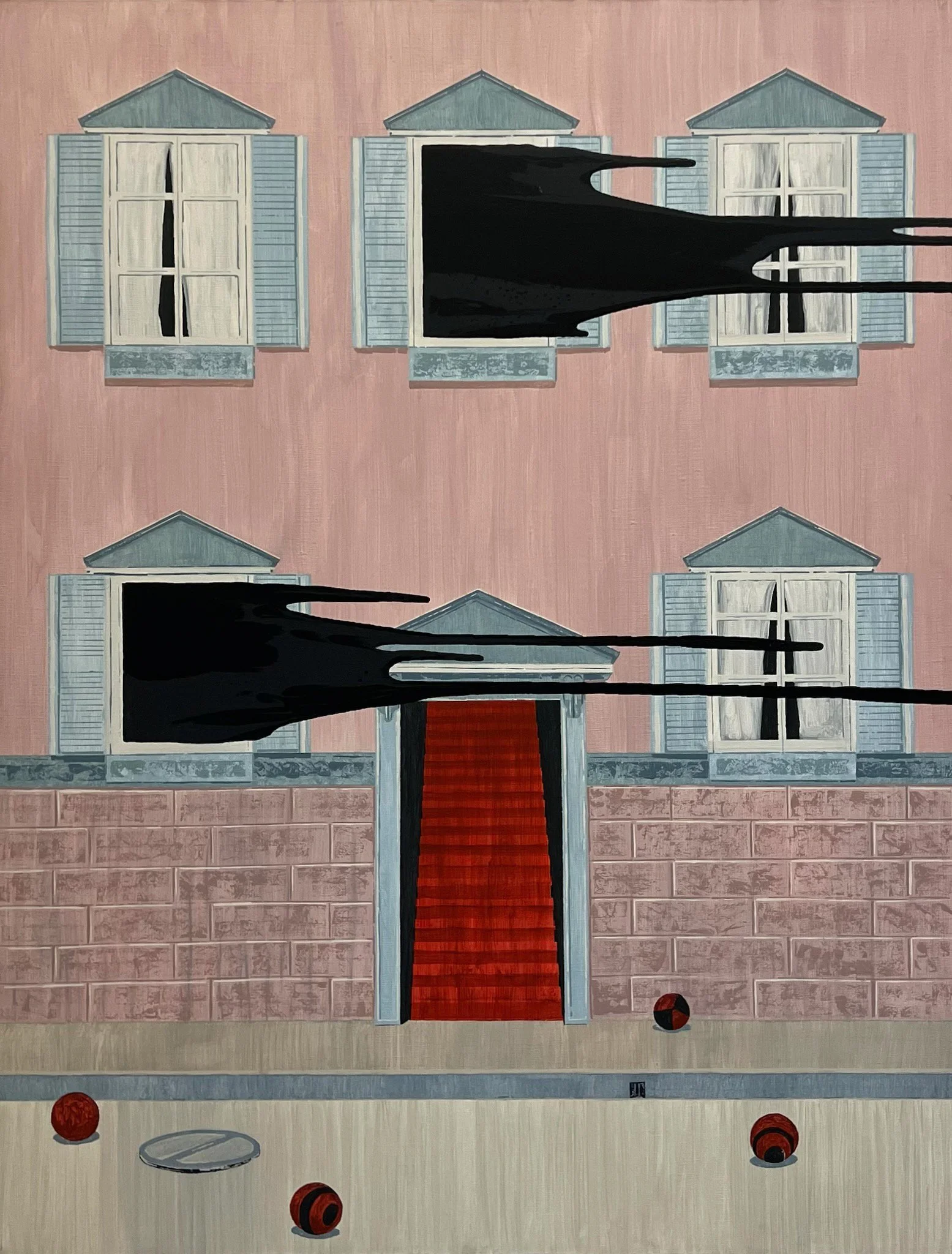
Ivan Plusch, 4 Red Balls, 2016, acrylic on canvas, 60 × 46 inches. CONTACT THE GALLERY
Ivan Plusch
Ivan Plusch approaches painting through theatrical figuration, constructed environments, atmospheric surfaces, and psychologically heightened scenes. His works often place figures within spaces that appear familiar but remain difficult to locate fully in either lived experience or imagination.
Narrative is present in Plusch’s paintings, but it is rarely resolved. Figures seem to inhabit moments that have already begun or may be on the verge of changing. Architecture, landscape, gesture, and atmosphere contribute to a sense of suspended action, allowing each image to suggest a larger story without providing a fixed conclusion.
The paintings included in the Summer Salon introduce Plusch’s interest in constructed space and psychological uncertainty. Their figures appear surrounded by environments that are simultaneously descriptive and unstable. The viewer may recognize the components of the scene without being able to determine exactly what has happened or what will follow.
Related paintings from Plusch’s broader practice, including works in which figures become blurred, partially dissolved, or absorbed into their surroundings, further clarify the importance of instability within his imagery.
In these paintings, the body does not occupy space securely. Figures emerge and recede, suggesting the uncertainty of memory and the difficulty of fixing a person, moment, or experience into a permanent image. The painted surface becomes a place where presence and disappearance operate simultaneously.
Blurred passages, drips, and atmospheric interruptions complicate the relationship between the figure and the surrounding environment. These elements do not merely obscure the subject. They make instability part of the work’s meaning.

Ivan Plusch, Room #4, 2014, acrylic and varnish on canvas, 78 × 58 inches. CONTACT THE GALLERY
Plusch’s compositions can also suggest the influence of cinema and photographic framing. Cropped viewpoints, dramatic spatial relationships, and moments of interruption create the impression that the viewer has entered a scene already in progress.
Seen in relation to the works in the Salon, the blurred figures from Plusch’s larger body of work reveal a sustained concern with perception, disappearance, narrative, and the vulnerability of the human image. The painting does not simply represent an event; it becomes a space in which memory and identity remain unsettled.
His work offers a productive counterpoint to Tobreluts. Both artists engage constructed imagery and the instability of perception, but they do so through different visual and material languages. Where Tobreluts frequently turns toward historical forms, mythology, and technological mediation, Plusch locates uncertainty within the painted figure, the interrupted narrative, and the dissolving surface.
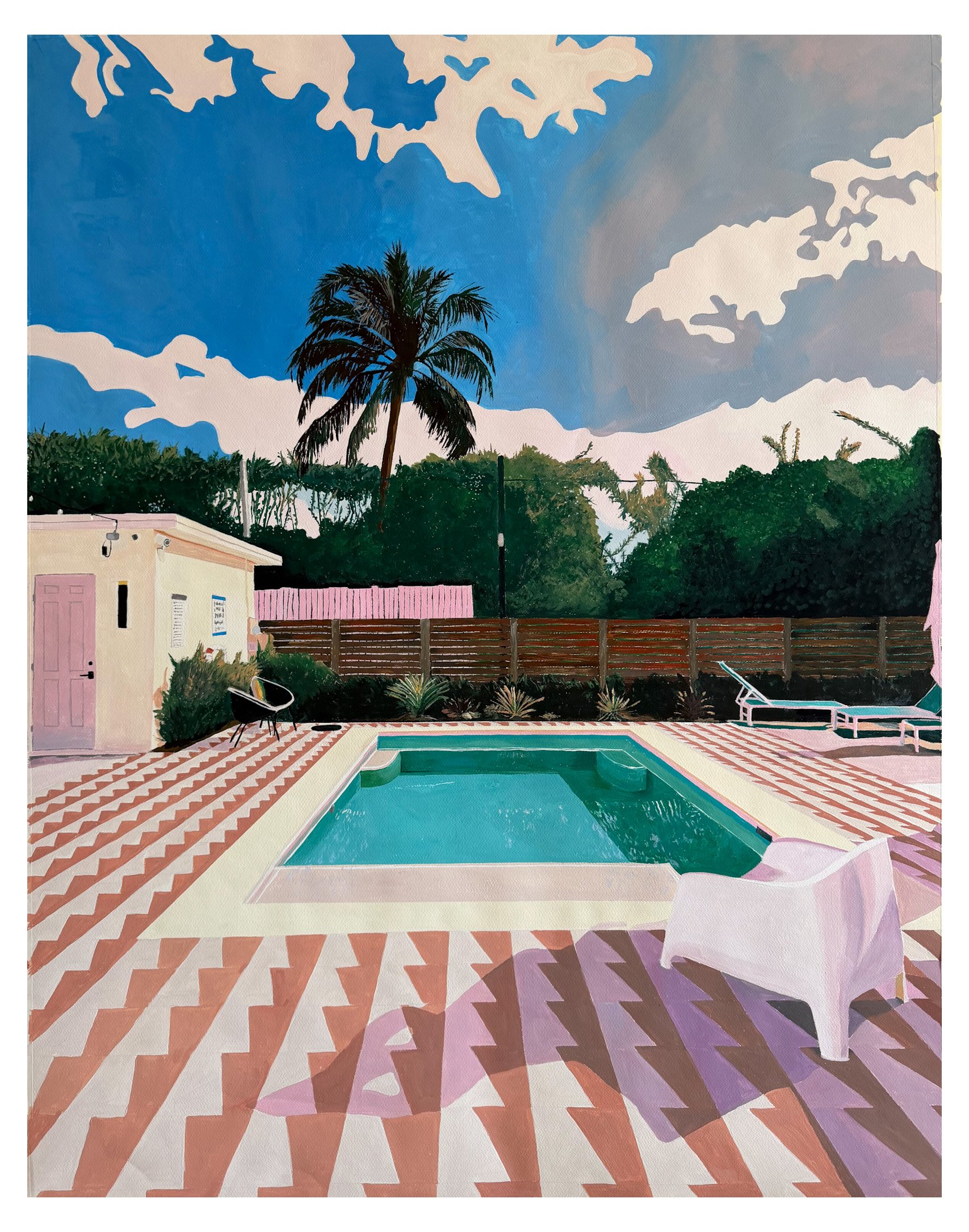
Mia Katrina Guile, Here, not here, 2026, Flashe on paper, 48 × 40 inches (121.9 × 101.6 cm), VIEW ON ARTSY
MIA KATRINA GUILE
Mia Katrina Guile’s newest paintings approach landscape and architecture through reflection, atmosphere, and psychological space. Familiar environments become places that feel both observed and remembered, grounded in physical reality yet transformed by shifting light, water, and perception.
Guile’s recent work has continued to develop in formal and emotional depth.. Architectural forms, trees, pools, windows, and reflected surfaces are not treated simply as descriptive elements. They become part of a larger emotional structure in which exterior and interior experience begin to overlap.
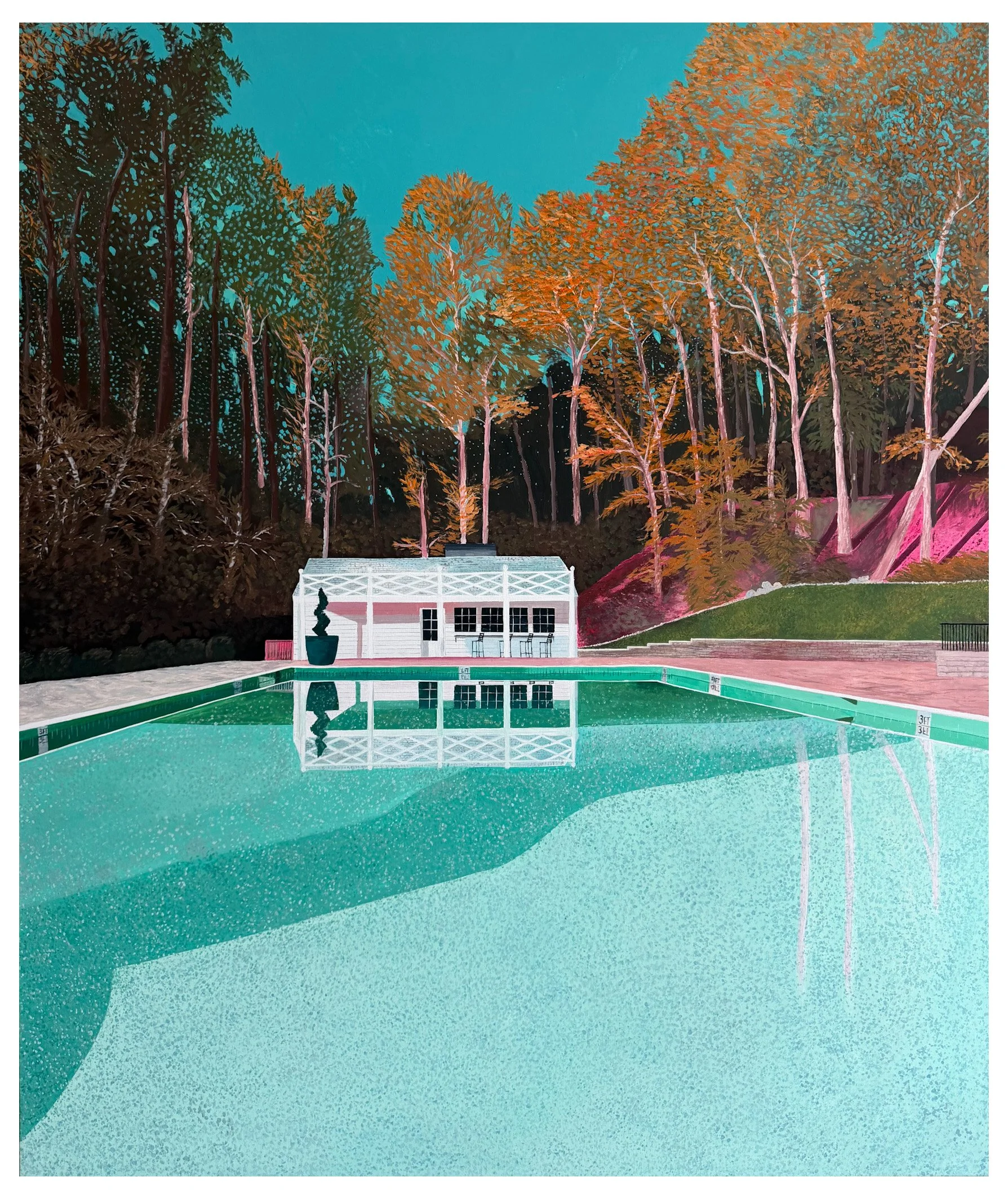
Mia Katrina Guile, Last reflection, 2026, Flashe on linen, 54 × 46 inches, VIEW ON ARTSY
The apparent stillness of these paintings is animated by reflection and changing light. Reflected forms interrupt clear boundaries, while water, glass, and architecture create spaces that seem to move between direct observation and memory.
In one of her newest paintings in the Salon, landscape, architecture, and reflection are brought together within a carefully balanced composition. The image initially appears familiar, yet sustained looking reveals subtle shifts in space, surface, and atmosphere.
Reflected forms blur the distinction between the physical environment and its image. Water and glass become perceptual thresholds, allowing the painting to move between what is seen, what is remembered, and what is felt.
Guile’s work demonstrates how contemporary landscape painting can extend beyond straightforward description. The environment becomes a means of considering memory, perception, stillness, and the emotional character of place.
Her paintings also establish a productive relationship with the practices of Tobreluts and Plusch. While their works depend more explicitly upon constructed figures, shifting identities, and theatrical imagery, Guile creates visual depth through architecture, light, and reflection. The landscape itself becomes psychologically resonant.
The absence of figures does not empty these spaces of human presence. Instead, the environments seem to retain traces of observation and experience. Their stillness creates a sense of suspended time, allowing memory and atmosphere to remain present without the need for an explicit narrative.
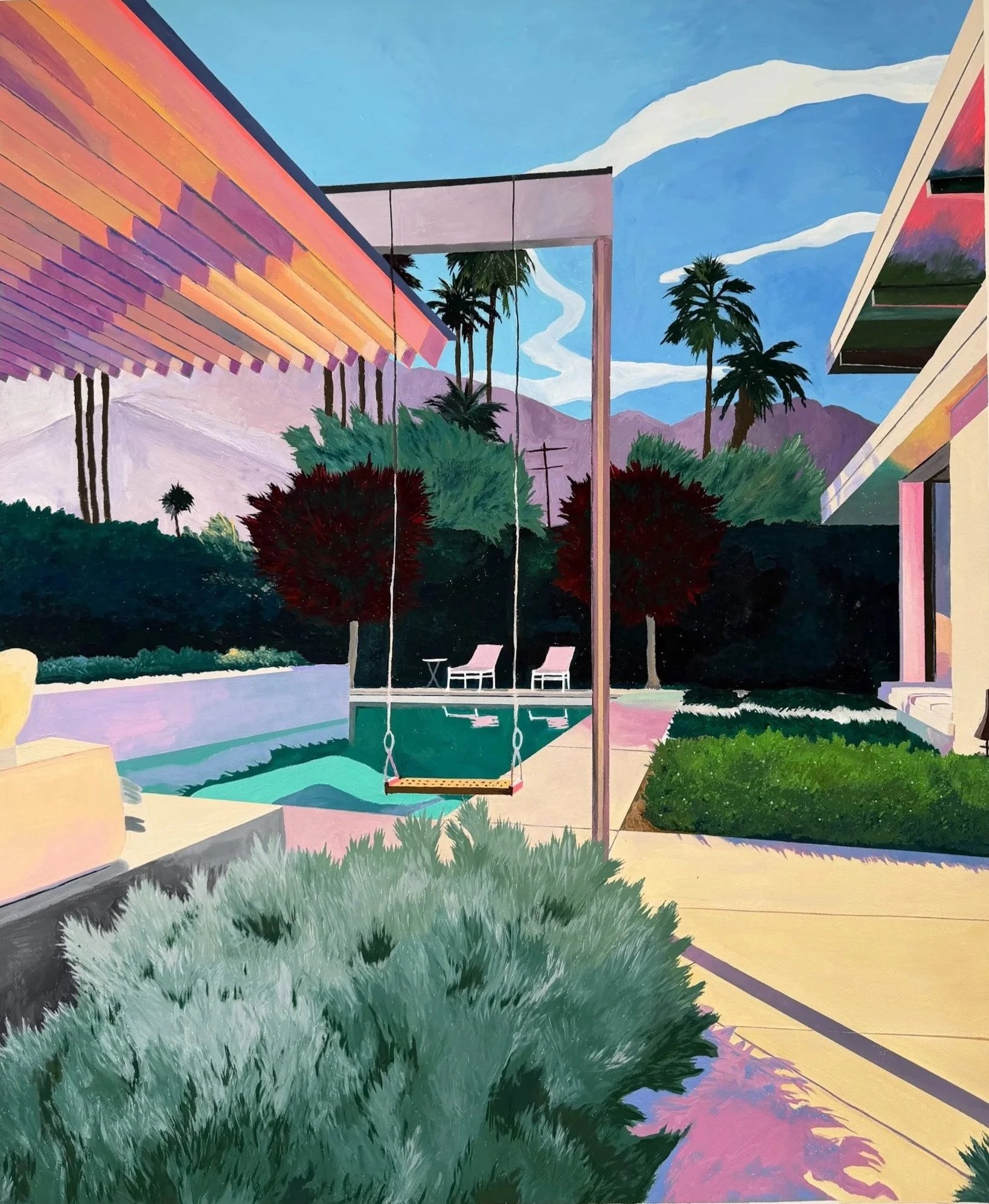
Mia Katrina Guile, Suspended, 2026, Flashe on paper, 44 × 36 inches (111.8 × 91.4 cm), VIEW ON ARTSY
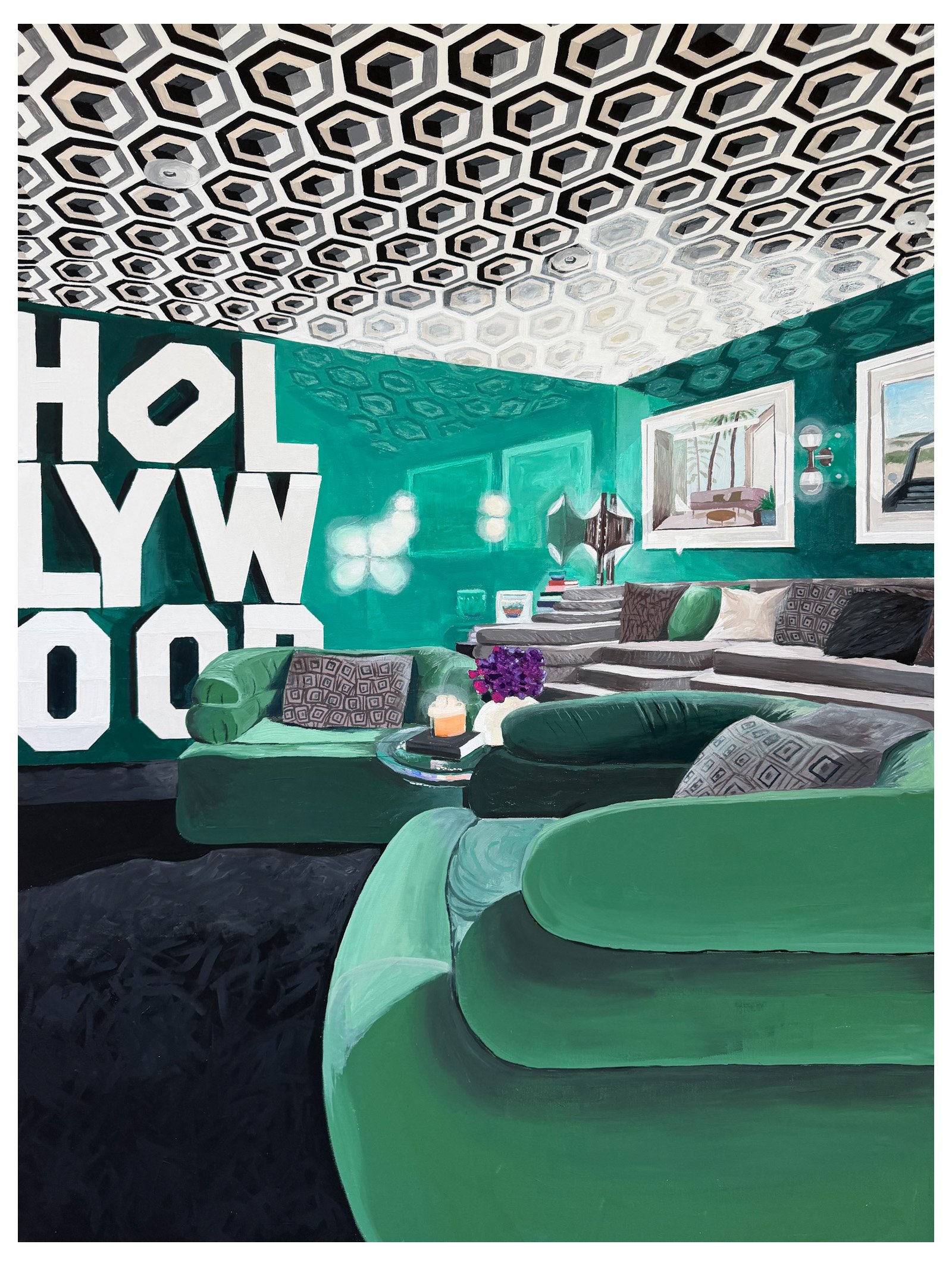
Mia Katrina Guile, Arrival Scene, Flashe on linen, 30 × 40 inches. VIEW ON ARTSY
Within the larger exhibition, Guile’s work offers a sustained consideration of contemporary landscape, architecture, and interior space. It also allows viewers to follow the development of her painting practice and to encounter the growing formal and emotional depth of her recent work.
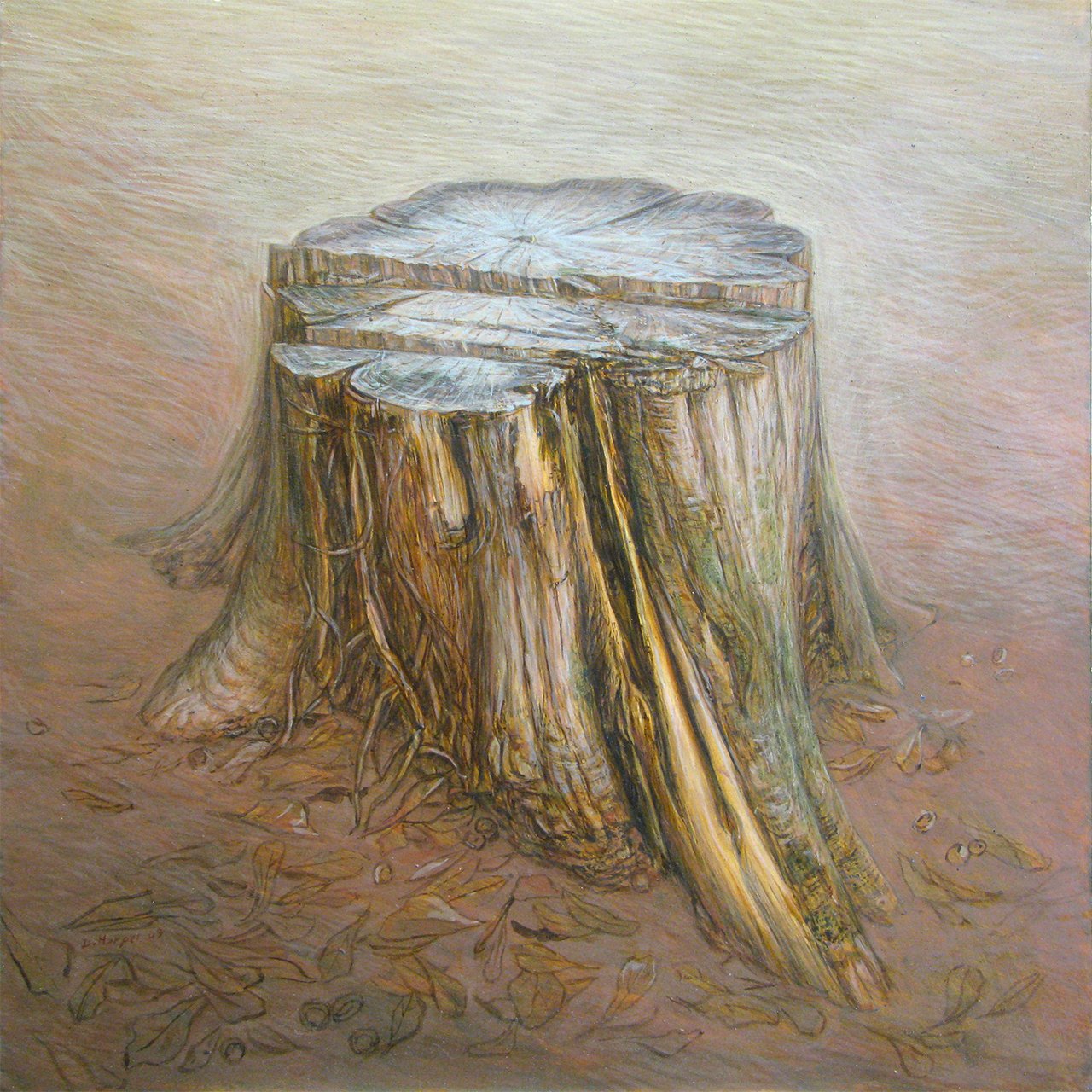
Dennis Harper, Landscape with Stump, 2012, egg tempera over casein on panel, 9 × 9 inches (22.9 × 22.9 cm), VIEW ON ARTSY
Dennis Harper
Dennis Harper’s egg tempera paintings offer a markedly different encounter. Their intimate scale and concentrated imagery require close attention, creating quiet but psychologically charged relationships between the viewer and the painted object.
Egg tempera is a historically resonant and technically demanding medium. Its quick-drying character requires careful preparation and the gradual development of an image through repeated layers and precise marks. In Harper’s work, that discipline produces surfaces of unusual clarity and density.
The four paintings included in the Summer Salon do not depend upon spectacle or imposing scale. Their strength emerges through sustained looking, subtle tonal relationships, and the tension between technical control and emotional ambiguity.
Harper’s subjects possess a concentrated presence. Each painting feels carefully contained, yet the images suggest psychological or narrative conditions that extend beyond their modest dimensions.
His use of egg tempera establishes a meaningful relationship between historical technique and contemporary observation. Harper does not employ the medium simply because of its traditional associations. He uses its particular visual qualities—precision, luminosity, and layered surface—to construct images that feel immediate while remaining difficult to fully resolve.
The physical character of the paintings is essential. Their surfaces develop gradually and reward proximity, encouraging a slower kind of attention than larger or more immediately theatrical works might demand.
Harper’s paintings also introduce a different relationship to history than the one found in Tobreluts’s work. Rather than transforming historical imagery through contemporary technology, he brings a historically significant medium into contact with present-day subjects and psychological conditions.
Within the Summer Salon, Harper’s paintings create spaces of pause. Surrounded by more expansive visual statements, they demonstrate how intensity can be achieved through restraint, material discipline, and intimate scale.
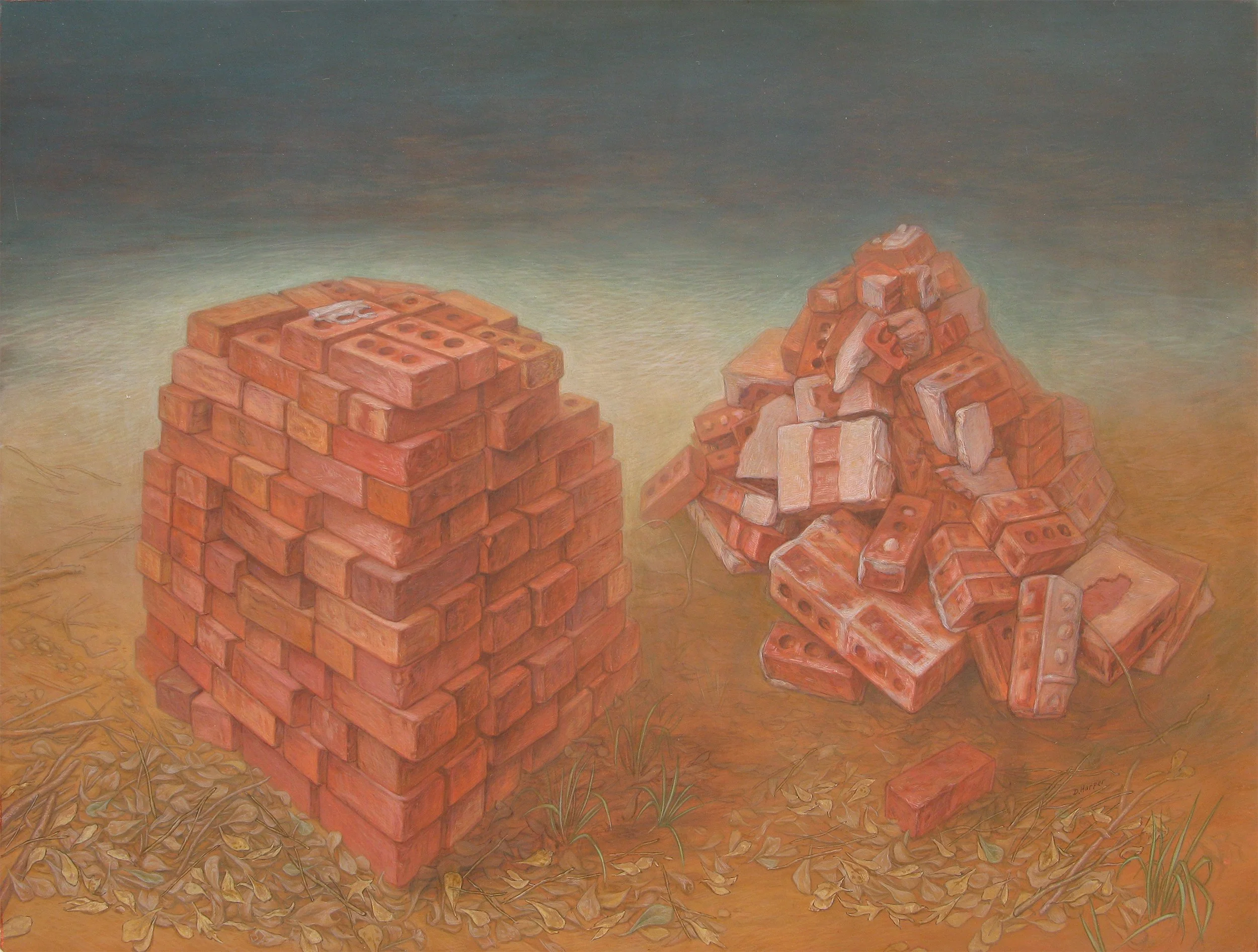
Dennis Harper, Sticks and Stones 4, 2012, egg tempera over casein on panel, 18 × 24 inches (45.7 × 61 cm) , VIEW ON ARTSY
Four Approaches to the Image
Presented together, Tobreluts, Plusch, Guile, and Harper demonstrate four different ways in which contemporary artists can engage history, perception, narrative, and material.
Tobreluts transforms classical and mythological imagery through digital construction, lenticular technology, and painting. Plusch creates theatrical scenes in which figures, memory, and narrative remain psychologically unsettled. Guile uses landscape, architecture, light, and reflection to develop emotionally resonant environments. Harper works through the concentrated discipline of egg tempera, creating intimate images that reward sustained attention.
The artists do not represent a single school, generation, nationality, or aesthetic approach. The significance of considering them together lies precisely in their differences.
For Tobreluts, the image becomes a meeting point between historical memory, technology, and the movement of the viewer. For Plusch, it becomes a space of suspended narrative, disappearance, and psychological instability. For Guile, it becomes an environment in which familiar places are transformed through atmosphere and reflection. For Harper, it becomes a carefully constructed object whose scale and material presence intensify the act of looking.
The Summer Salon provides a framework through which these practices can be considered both independently and in relation to one another. Works currently on view establish the exhibition’s immediate visual experience, while related works from the artists’ broader practices allow the conversation to extend beyond the physical boundaries of the installation.
This approach reflects the Salon’s evolving character. Rather than functioning only as a fixed group exhibition, it creates opportunities to look more closely at individual artists, trace developments across their practices, and connect works in the gallery with larger artistic and institutional histories.
Together, the four artists reveal meaningful connections across historical imagery, digital culture, theatricality, memory, landscape, and material process. The exhibition becomes not only a presentation of individual works, but also a point of entry into larger practices that merit continued attention from viewers, collectors, writers, and institutional audiences.