
Still Beautiful in My Memory: Frozen Frames, Summer Salon, and Art in Public Life
Jonas Mekas, Alexandrea Procida, Mia Katrina Guile, Jean-Daniel Lorieux, Ivan Plusch, Olga Tobreluts, George Papadakis, Christopher B. Wagner, and Steve Prince at SATÉ
Matney Gallery’s Summer Salon brings together artists whose works move through memory, light, cinema, abstraction, nostalgia, mythology, fashion, sculpture, civic reflection, and public gathering. The exhibition begins with Jonas Mekas, whose Frozen Frames offer a powerful lens through which to understand the rest of the Salon: art as a way of holding time, preserving fragments, and giving shape to lived experience.
The Salon brings Mekas’s film stills into conversation with Alexandrea Procida’s memorial work American Exceptionalism: Liberty & Justice For …, the paintings of Mia Katrina Guile, the photographs of Jean-Daniel Lorieux, the contemporary abstractions of Ivan Plusch and Olga Tobreluts, the nostalgic mixed-media works of George Papadakis, and the carved sculpture of Christopher B. Wagner. Together, these artists explore how images and objects hold memory, presence, and meaning over time.
Additional works by Dana Jo Cooley, Jill Carnes, Ian McFarlane, Rebecca Shkeyrov, Nicole Santiago,, Brian Kreydatus, and others further expand the Salon’s conversation across image, memory, material presence, and contemporary observation.
The presentation also extends beyond the gallery through selected works by Steve Prince at SATÉ: A New American Experience in Newport News, where art enters a space of hospitality, conversation, and community.
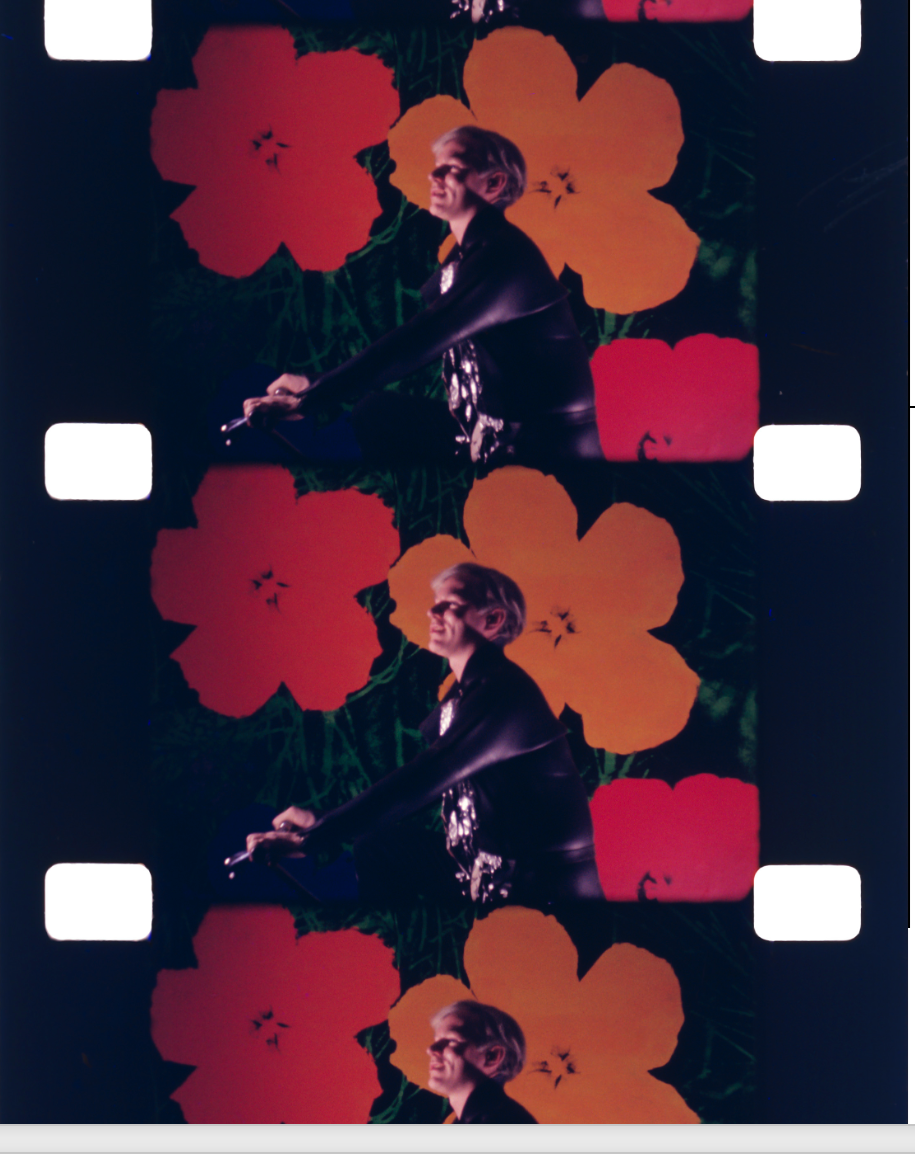
Jonas Mekas (American,
b. Lithuania, 1922)
Andy Warhol at the
Opening of his show
Whitney Museum, May 1,
1971
17 x 22 inches
Archival Photographic
Edition of 3 + 2 AP, 2013
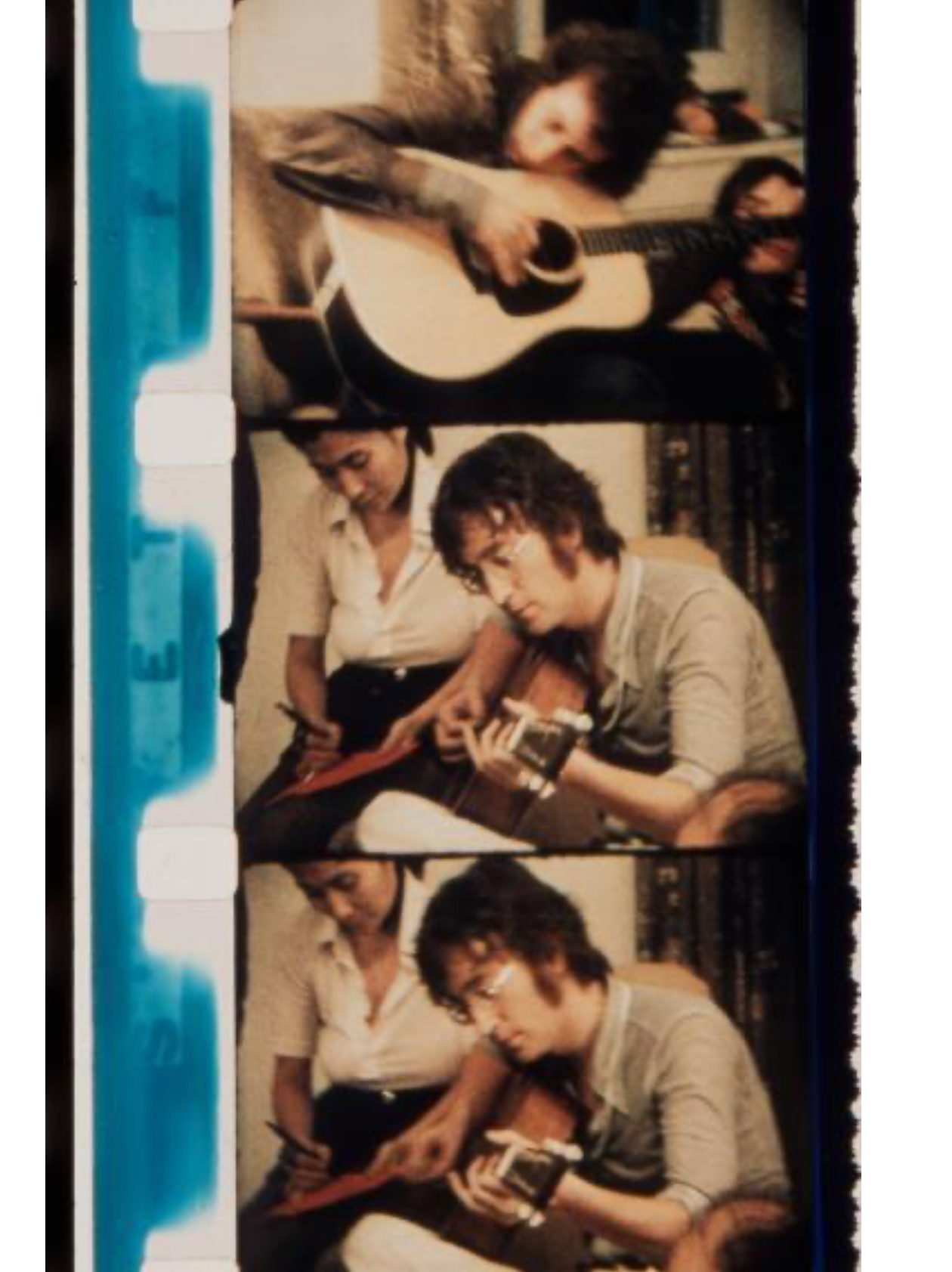
Jonas Mekas (American, b.
Lithuania, 1922)
John & Yoko at John’s
birthday party
Oct. 9, 1970
17 x 22 inches
Archival Photographic Print
Edition of 3 + 2 AP, 2013
JONAS MEKAS: FROZEN FRAMES AT MATNEY GALLERY
Following the presentation of Still Beautiful in My Memory at Andrews Gallery, Matney Gallery has installed a focused selection of Jonas Mekas Frozen Frames and related works for continued viewing and discussion through mid August. The gallery presentation includes several unframed works that were not on view at William & Mary, offering an expanded opportunity to consider the project in relation to film, archive, memory, and the photographic object.
Collectors, archivists, curators, and colleagues are welcome to see the works by appointment and discuss the project’s ongoing development.
This presentation extends conversations that began during the Andrews Gallery exhibition and continues research around Mekas’s still images, films, and legacy. In the more intimate setting of the gallery, the works can be considered closely as objects, fragments, and archival images, while remaining connected to Mekas’s larger cinematic language.
Available to view and discuss by appointment through late August.
Sign the guestbook to stay informed on upcoming developments related to Jonas Mekas.
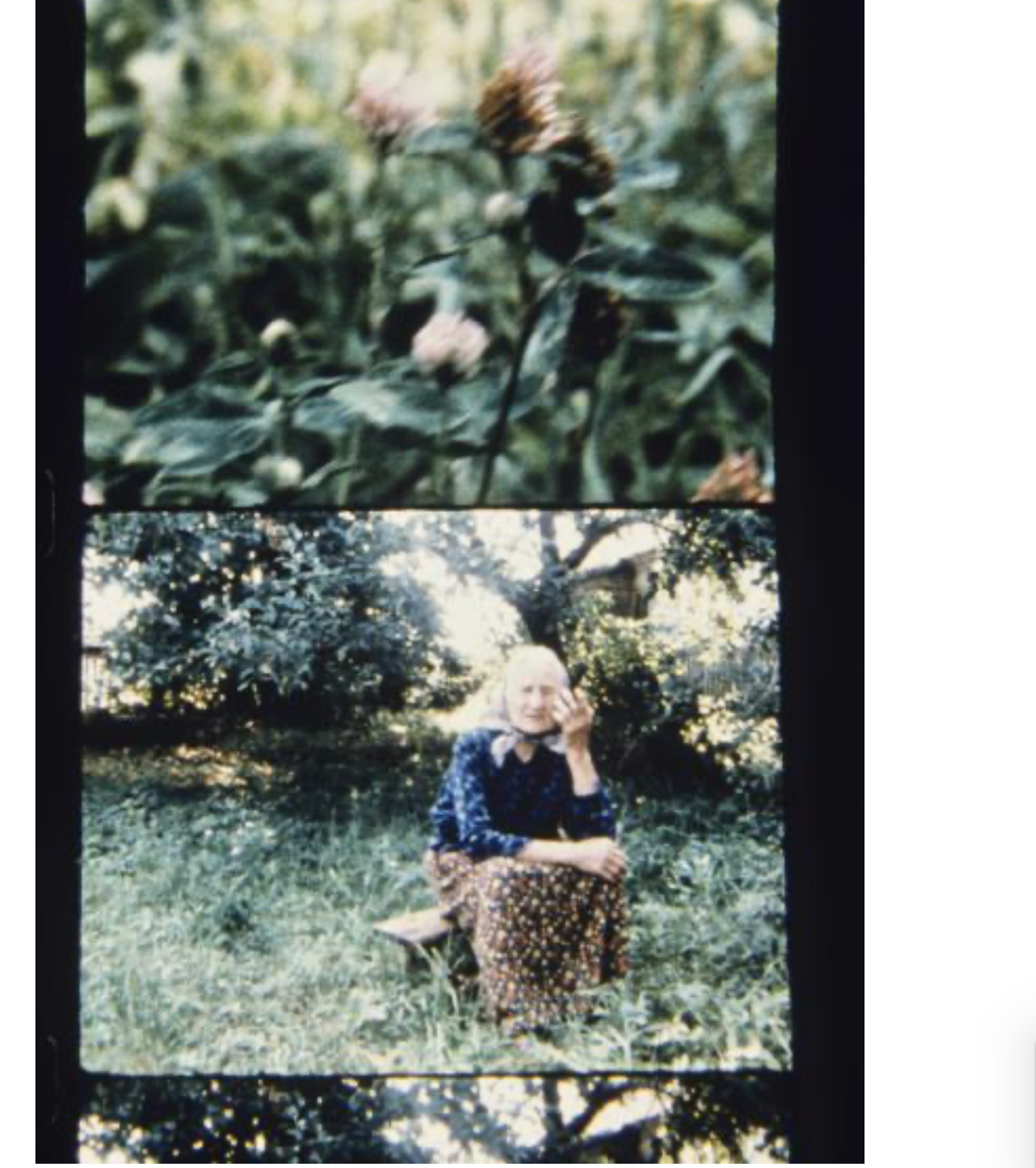
The Andrews Gallery at the College of William & Mary presented Still Beautiful in My Memory, an exhibition of works by pioneering avant-garde filmmaker Jonas Mekas (1922–2019). Organized in collaboration with The Jonas Mekas Estate, Deborah Colton Gallery, OUTPOST NYC DCG, and Lee Matney Gallery, the exhibition brought together Mekas’s rarely exhibited framed still images – known as the “Frozen Frames” – with a continuous screening of his five-hour epic, As I Was Moving Ahead Occasionally I Saw Brief Glimpses of Beauty (2000). Together, these works explore fragmentation, memory, displacement, and the poetic construction of a life through cinema.
Born in Lithuania in 1922, Mekas was forced to flee his homeland during World War II amid the successive occupations of Eastern Europe. After being detained by Nazi authorities and later living in displaced persons camps in Germany, he emigrated to the United States in 1949 as a refugee. His arrival in America marked not only the beginning of a prolific artistic life, but also the continuation of a journey shaped by exile and survival. His story underscores how refuge can foster extraordinary artistic innovation and enrich the cultural fabric of a nation.
The “Frozen Frames” are individual images physically cut from 16mm film strips during Mekas’s editing process. These interstitial fragments – moments once removed in the shaping of a sequence – are scanned and presented as archival prints. What was excised becomes the work itself. Suspended between motion and stillness, these images preserve fleeting gestures, flashes of light, partial figures, and transitional instants that would otherwise remain unseen. As conceptual anchors for the exhibition, the Frozen Frames reflect Mekas’s lifelong commitment to cinema as a diary form – an art built from fragments, impressions, and lived experience.
The presentation of these works at William & Mary reflects ongoing research and curatorial stewardship by Lee Matney, situating Mekas’s images and films within broader conversations about archival practice, exile, and the relationship between moving image and photographic form. Presented within an academic setting, the exhibition extends that dialogue and underscores the continued relevance of Mekas’s diaristic cinema for contemporary museum and university audiences.
Jonas Mekas: Still Beautiful in My Memory offers a focused exploration of Mekas’s enduring influence and invites audiences to inhabit his cinematic language: intimate, diaristic, and profoundly human.
Special thanks to Chris Harris of Refuse Ordinary for his generous support of the project.
Alexandrea Procida: American Exceptionalism: Liberty & Justice For …
Alexandrea Procida’s American Exceptionalism: Liberty & Justice For … brings a powerful work of memorial labor into the Summer Salon.
The piece consists of 296 hand-sewn backpacks, each embroidered with the name of a life lost to mass school shootings in the United States since 1966. Arranged in the form of an American flag, the backpacks transform an object associated with childhood, school, and daily routine into a field of absence and remembrance.
Procida uses sewing and embroidery as acts of care, mourning, and attention. The slow process of cutting, stitching, and assembling gives physical form to grief, resisting the speed with which public tragedies often fade from view. By removing the word “all” from the pledge’s promise of “liberty and justice for all,” the work quietly asks what that promise means when lives are lost and names must be remembered one by one.
Alexandrea Procida, known as Alex, is a Graphic Design major with minors in American Studies and Digital Humanities. Originally from Phoenix, Arizona, she brings together design, research, handwork, and civic reflection in a work that is visually immediate and deeply affecting.
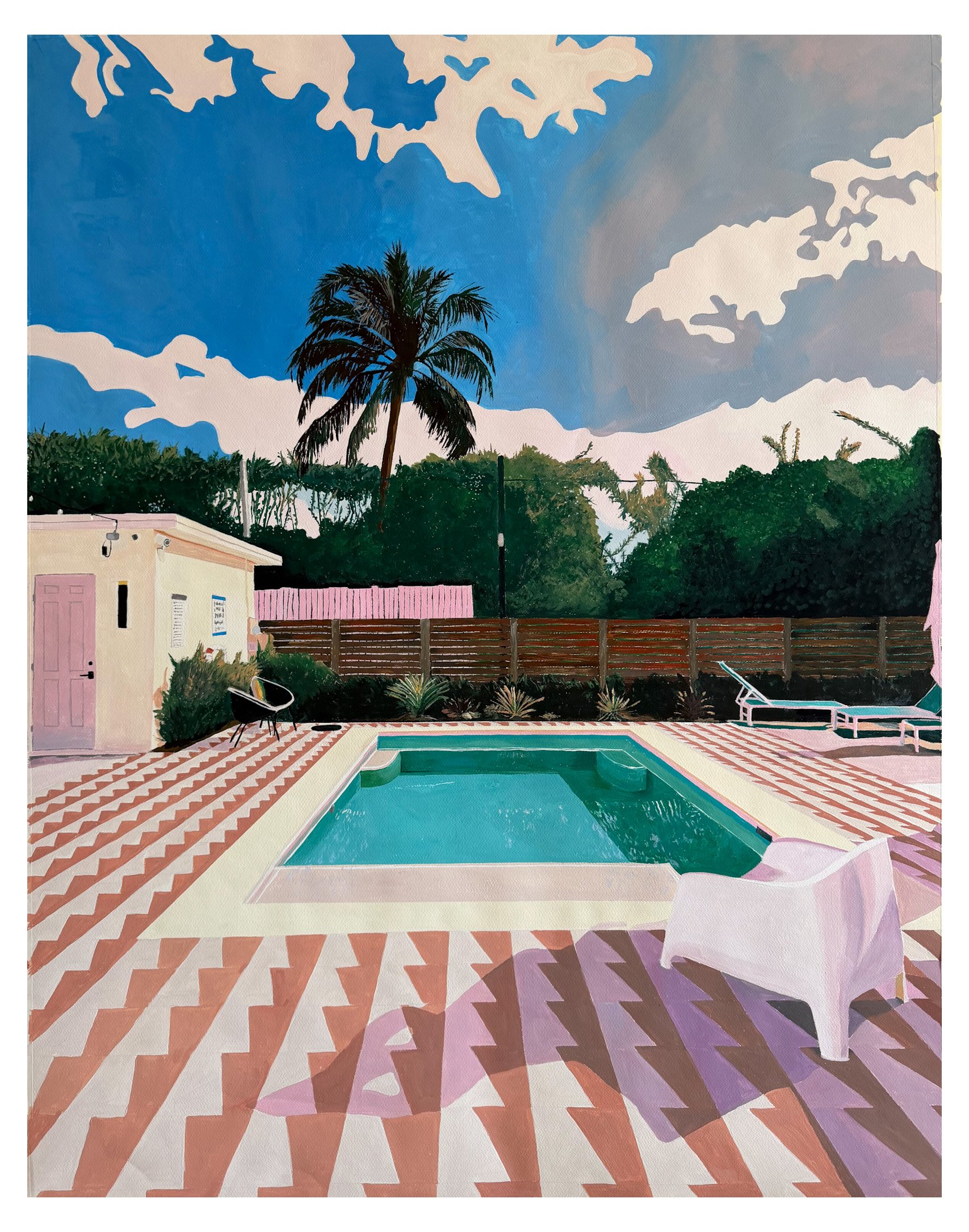
Mia Katrina Guile
Mia Katrina Guile brings a contemporary painterly voice into the Summer Salon. Her work is rooted in color, memory, emotional space, and the psychological charge of interiors and landscapes. Her paintings often feel less like literal depictions of place than remembered environments: rooms, passages, and landscapes shaped by feeling.
Guile’s practice speaks to the renewed importance of painting as a vessel for interior life. In an era saturated by digital images, her work returns attention to color, touch, atmosphere, and the emotional architecture of space. Her paintings suggest that private experience can still carry public resonance.
Her background reflects a broad engagement with art, community, and observation. She has developed her work through studio practice, regional exhibitions, continuing study, and museum-adjacent opportunities. Her visibility in Virginia’s contemporary art landscape, including recognition through Virginia MOCA-connected programming, places her within a growing conversation about contemporary painting in the region.
Guile’s paintings invite sustained looking. They are accessible without being obvious. Their color draws the viewer in, but their atmosphere keeps the encounter open. The work can be approached through formal concerns such as composition, surface, palette, and spatial flattening, but also through more human questions: how memory reshapes place, how interiors hold emotion, and how familiar spaces can become quietly charged.
Her paintings offer immediacy and depth, with a visual presence that can unfold slowly over time. They belong to broader conversations about contemporary figuration, abstraction, women artists, regional painting, and psychological landscape.
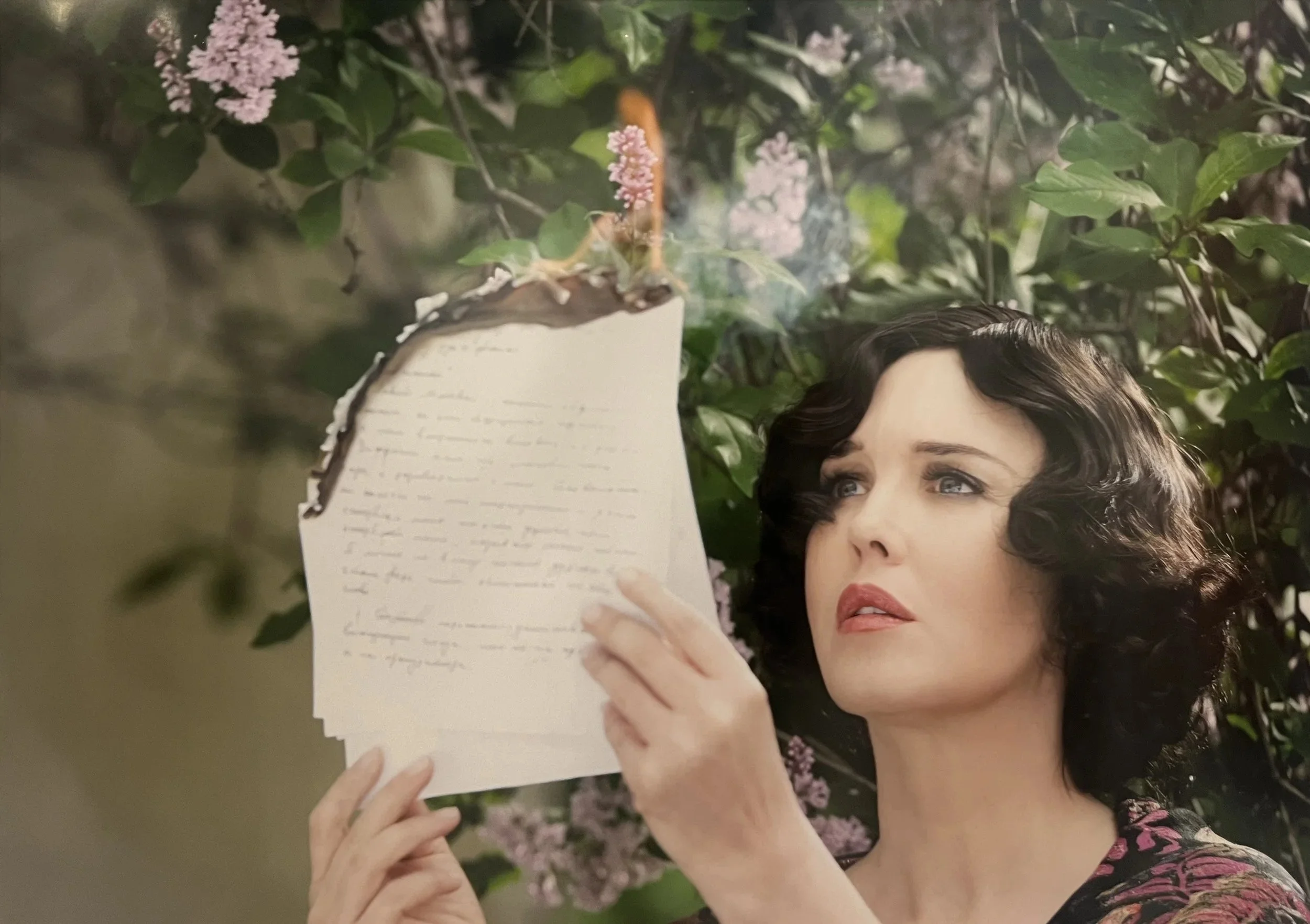
Jean-Daniel Lorieux
“Master and Margarita,” burning of the manuscript, M/M-3
Near Hohlovski sidestreet, Bolshoi Spasoglin,Moscow2008, printed 2011
Photographic archival print
31.5 x 47.2 inches (framed)
Edition 1/20
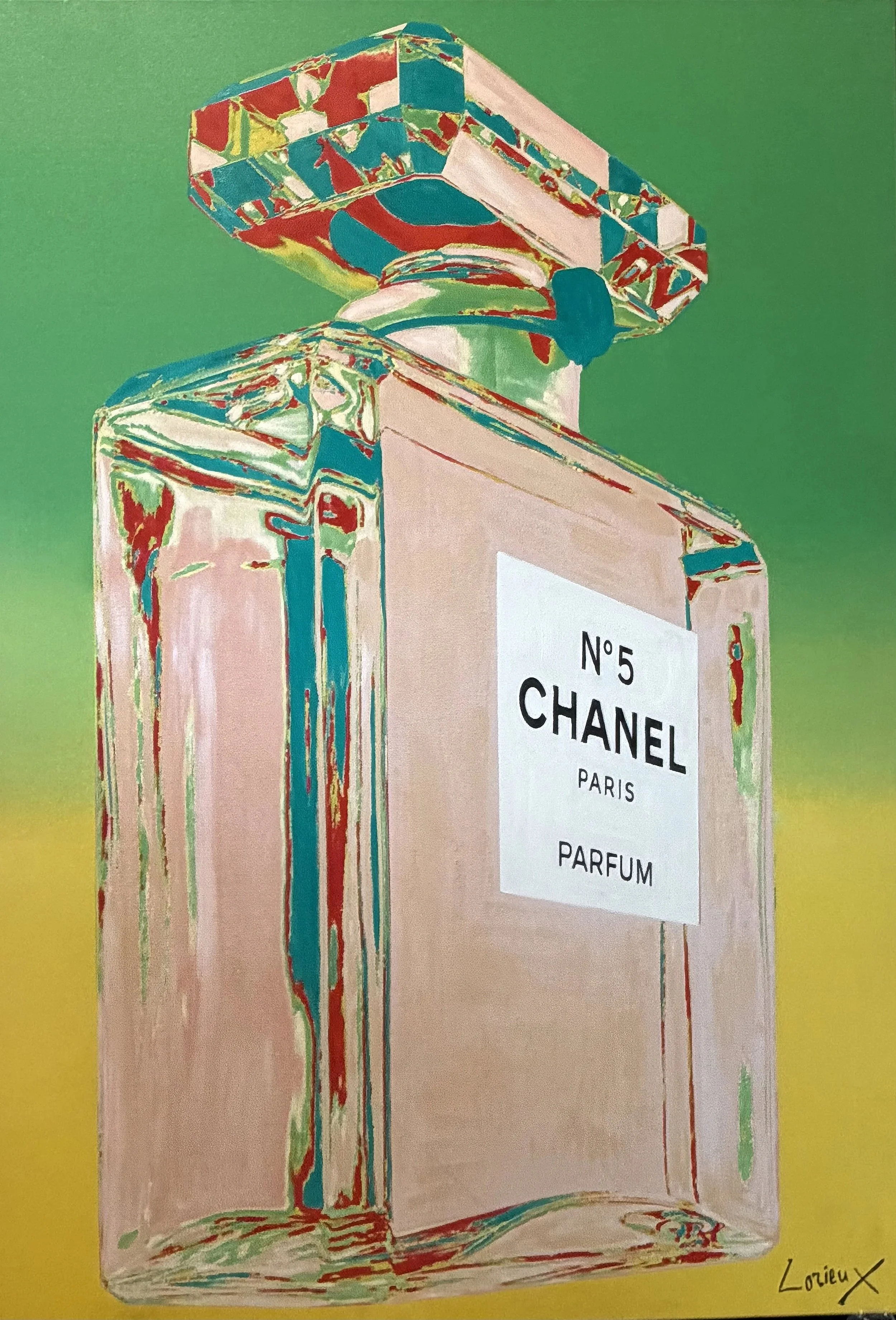
Jean-Daniel Lorieux,
Chanel No. 5,
Mixed media and acrylic on canvas
Approximately 61.8 x 43.3 inches (framed)
Jean-Daniel Lorieux
Jean-Daniel Lorieux brings the world of fashion photography, saturated color, glamour, theatricality, and sunlit elegance into the Salon. His photographs occupy a distinctive place within late twentieth-century visual culture, where fashion, celebrity, luxury, advertising, travel, and fantasy intersect.
Born in Paris in 1937, Lorieux became known for a photographic language shaped by brilliance, heat, bodies, surfaces, and desire. His images often suggest another world: beaches, villas, pools, couture, sculptural bodies, bold color, and the heightened drama of fashion as performance. Yet beneath the glamour is a disciplined sense of composition. His photographs are not casual images of luxury; they are carefully constructed visual events.
Lorieux’s work matters because fashion photography has become central to how museums and serious collections understand modern image culture. Fashion images are no longer seen only as commercial artifacts. They reveal how societies construct ideals of beauty, leisure, class, gender, aspiration, celebrity, and style. Lorieux’s photographs are part of that history.
His work also offers an important contrast within the Salon. Where Mekas preserves fragments of ordinary life, Lorieux stages radiance. Where Guile turns inward toward memory and emotional space, Lorieux moves outward toward spectacle, surface, and the drama of looking. Together, they show that photography can hold both the private and the public, both diary and theater.
Lorieux’s photographs offer immediate visual pleasure while also connecting to the broader legacy of European fashion photography and the culture of the late twentieth century. Color, glamour, and beauty become points of entry into deeper questions about image-making and desire.
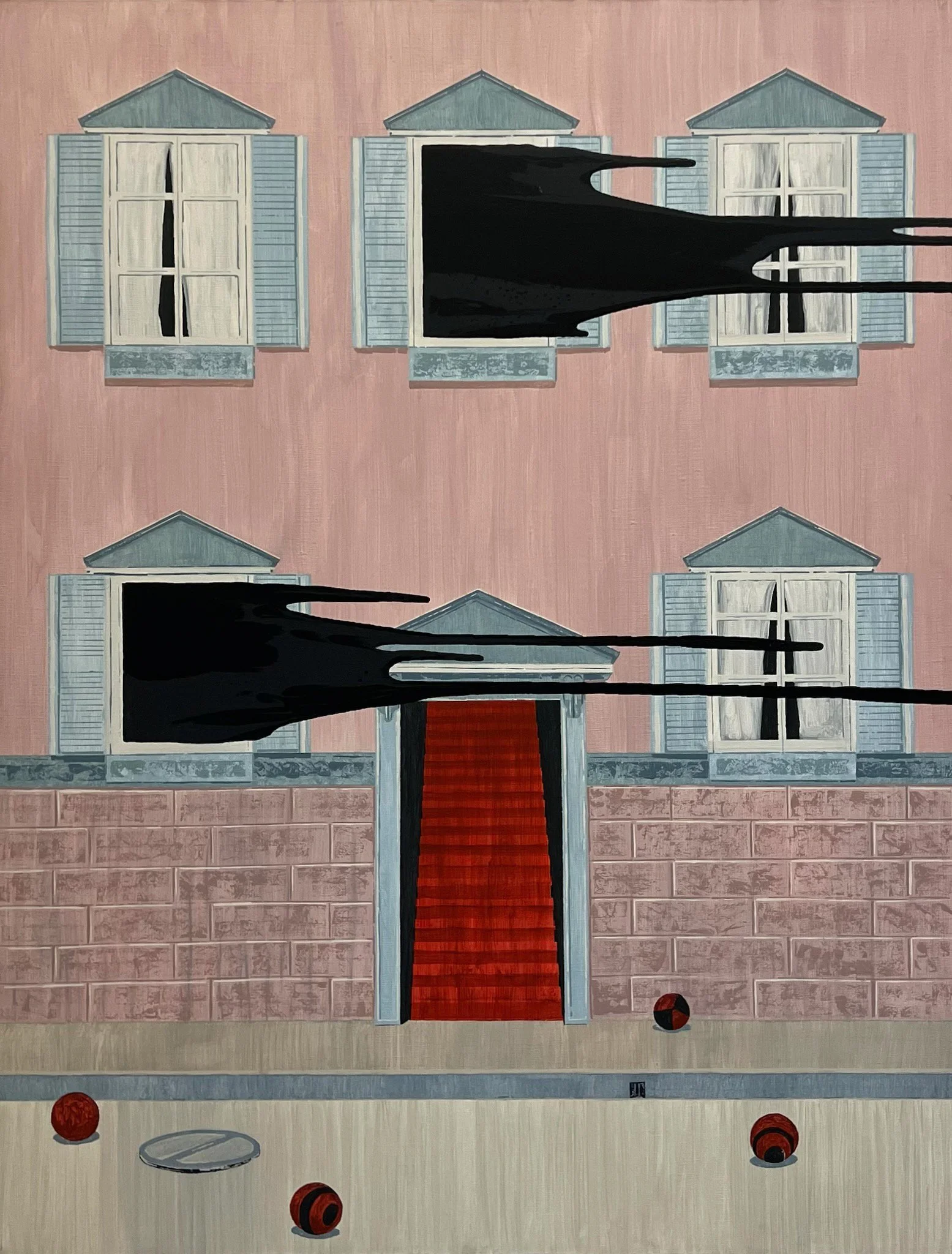
Ivan Plusch
4 Red Balls
2016
Acrylic on Canvas
60 x 46 Inches
Ivan Plusch
Ivan Plusch brings the Salon into the territory of contemporary abstraction, post-Soviet painting, and the changing nature of perception in a digital age. Born in Leningrad in 1981, Plusch emerged from the St. Petersburg art world and developed a practice that moves between painting, installation, abstraction, materiality, and image transformation.
His work is especially relevant now because it addresses the instability of seeing. In Plusch’s paintings, the viewer often encounters forms that seem to hover between the physical and the digital, between object and atmosphere, between surface and screen. His abstractions suggest a world in which perception is no longer stable, but fractured, accelerated, and reshaped by technology.
Plusch matters because painting today must contend with digital vision. The painted image exists in a world of screens, artificial intelligence, image feeds, compression, and endless reproduction. Rather than reject that condition, Plusch allows it to enter the work. His paintings become sites where physical material and digital sensation collide.
His work opens questions about contemporary abstraction after the internet, post-Soviet artistic identity, and the changing relationship between painting and technology. It is part of a larger conversation about how artists trained in traditional media respond to a visual culture increasingly governed by digital experience.
Plusch’s paintings carry both formal strength and intellectual urgency. They register something deeply contemporary: the feeling of living between physical presence and virtual perception. The work gives form to a condition many people recognize instinctively: the sensation that reality itself is being filtered, layered, and transformed by images.
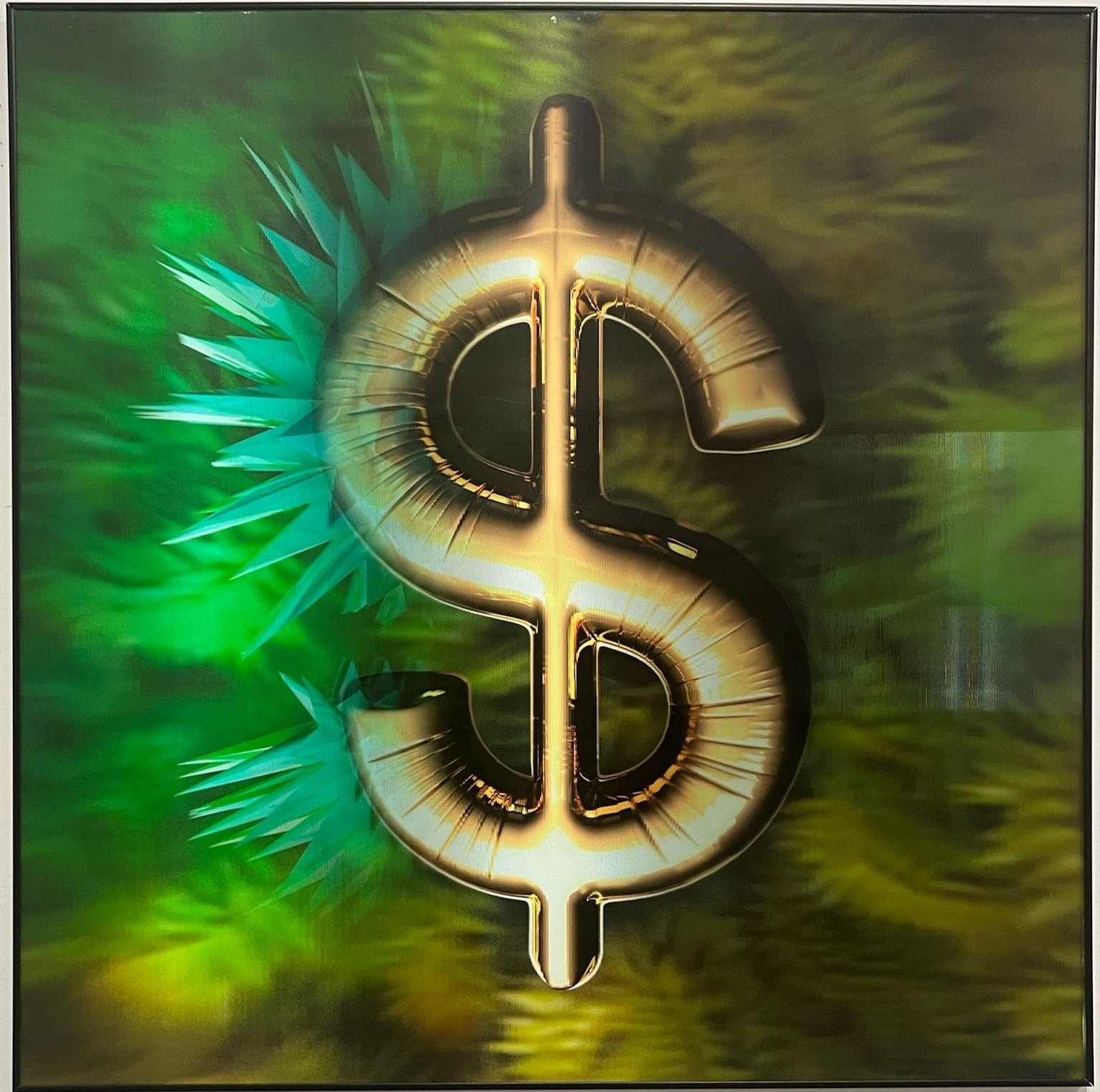
Olga Tobreluts
Dollar
2018
Lenticular Panel
39 x 39 Inches
Olga Tobreluts
Olga Tobreluts is one of the most internationally significant artists in the Salon. Associated with Neo-Academism and recognized as a pioneering figure in Russian digital art, Tobreluts has built a multidisciplinary practice that includes painting, photography, video, sculpture, and digital image-making.
Her work often brings classical imagery into contact with contemporary technology. Mythological figures, historical references, theatrical poses, digital surfaces, and futuristic atmospheres appear together. The result is a body of work that feels both ancient and technologically charged. Tobreluts does not treat history as something fixed. She reactivates it through digital culture, artificiality, performance, and transformation.
Tobreluts occupies a rare position between classical tradition and contemporary media. Her work connects art history, mythology, feminism, post-Soviet culture, digital technology, and the evolution of image-making. She belongs to conversations about painting after photography, photography after digital manipulation, and the body after technological transformation.
Her international exhibition history and institutional presence give her work particular importance. She represents a lineage of artists who understood early that digital tools would not simply create new images; they would change the way culture understands beauty, myth, identity, and power.
Within the Summer Salon, Tobreluts creates a strong dialogue with Ivan Plusch. Both artists engage digital perception, but from different positions. Plusch often works through abstraction and the unstable field of the image. Tobreluts frequently draws on mythology, figuration, and symbolic drama. Together, they expand the Salon beyond nostalgia into the future of visual culture.
Tobreluts’s images are immediately striking, but they also carry layered questions about the body, technology, beauty, and the persistence of myth in contemporary life.
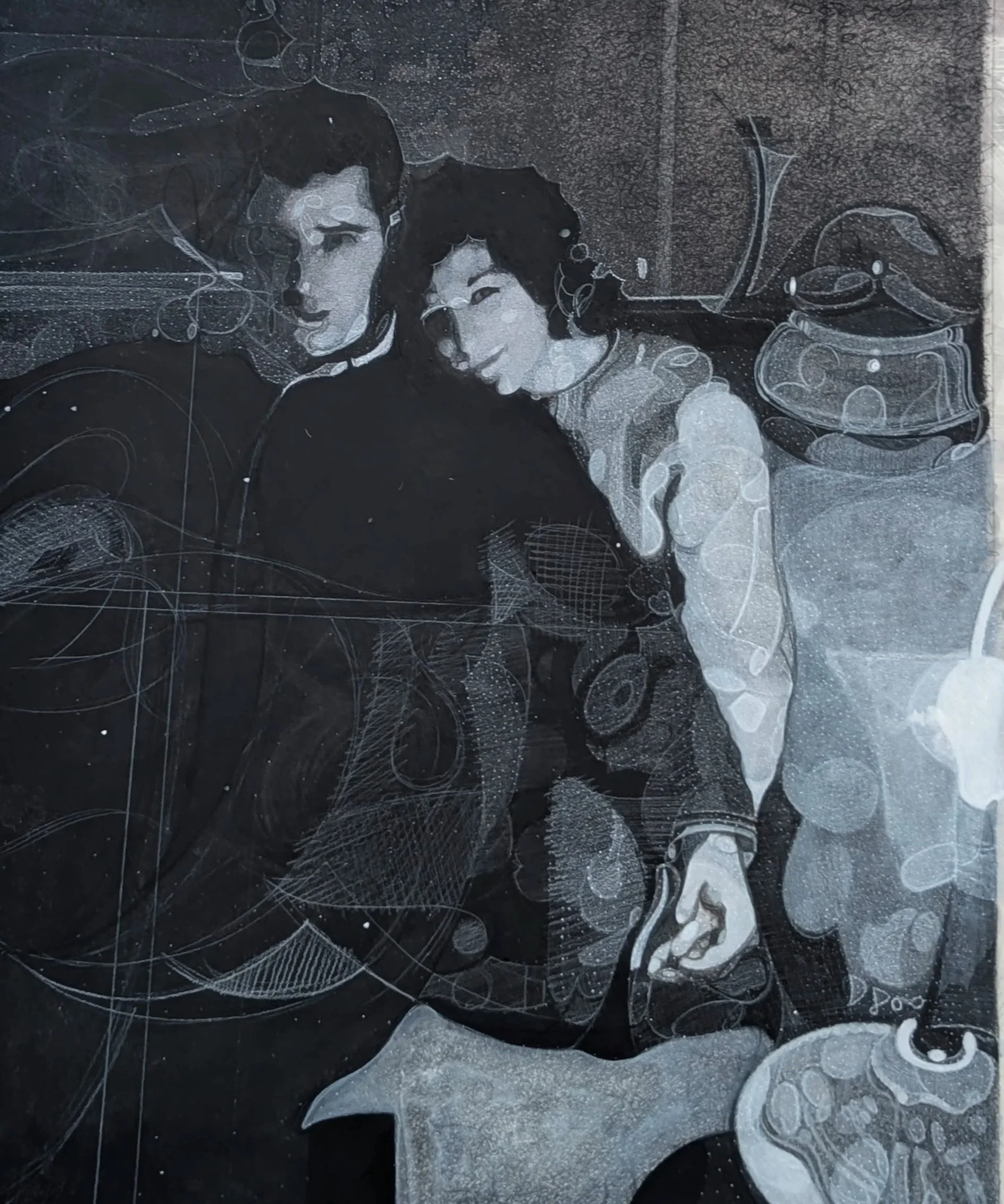
Chances Are, 2025
Acrylic paints, colored pencils, oil-based paint pens, graphite pencil on art board.
20 × 30 in | 50.8 × 76.2 cm
George Papadakis
George Papadakis brings memory, Americana, portraiture, and personal nostalgia into the Salon. His work is rooted in drawing, mixed media, and the emotional force of familiar images. He engages subjects that often come from popular culture, sports, music, childhood, and the shared visual archive of American life.
Papadakis’s work matters because nostalgia is not merely sentimental. It is one of the ways people organize memory. Objects, athletes, album covers, toys, faces, and cultural icons can carry enormous emotional weight. In his work, these images are not simply reproduced; they are filtered through time, surface, texture, and personal attachment.
His background in drawing and commissioned portraiture gives the work a strong foundation in likeness and recognition. But the more compelling dimension is the way his images become containers for memory. The viewer may recognize a figure or cultural reference, but the work also asks why recognition itself can be so powerful.
Within the Salon, Papadakis offers an important counterpoint to the more international and experimental positions of Mekas, Tobreluts, Plusch, and Lorieux. His work brings the conversation back to the emotional life of American images. He reminds us that the visual culture of sports, entertainment, music, and childhood also shapes identity and memory.
Papadakis belongs within conversations about regional art, American popular imagery, portraiture, and the relationship between personal memory and mass culture. His work offers familiarity, warmth, and narrative resonance while transforming recognition into something more lasting.
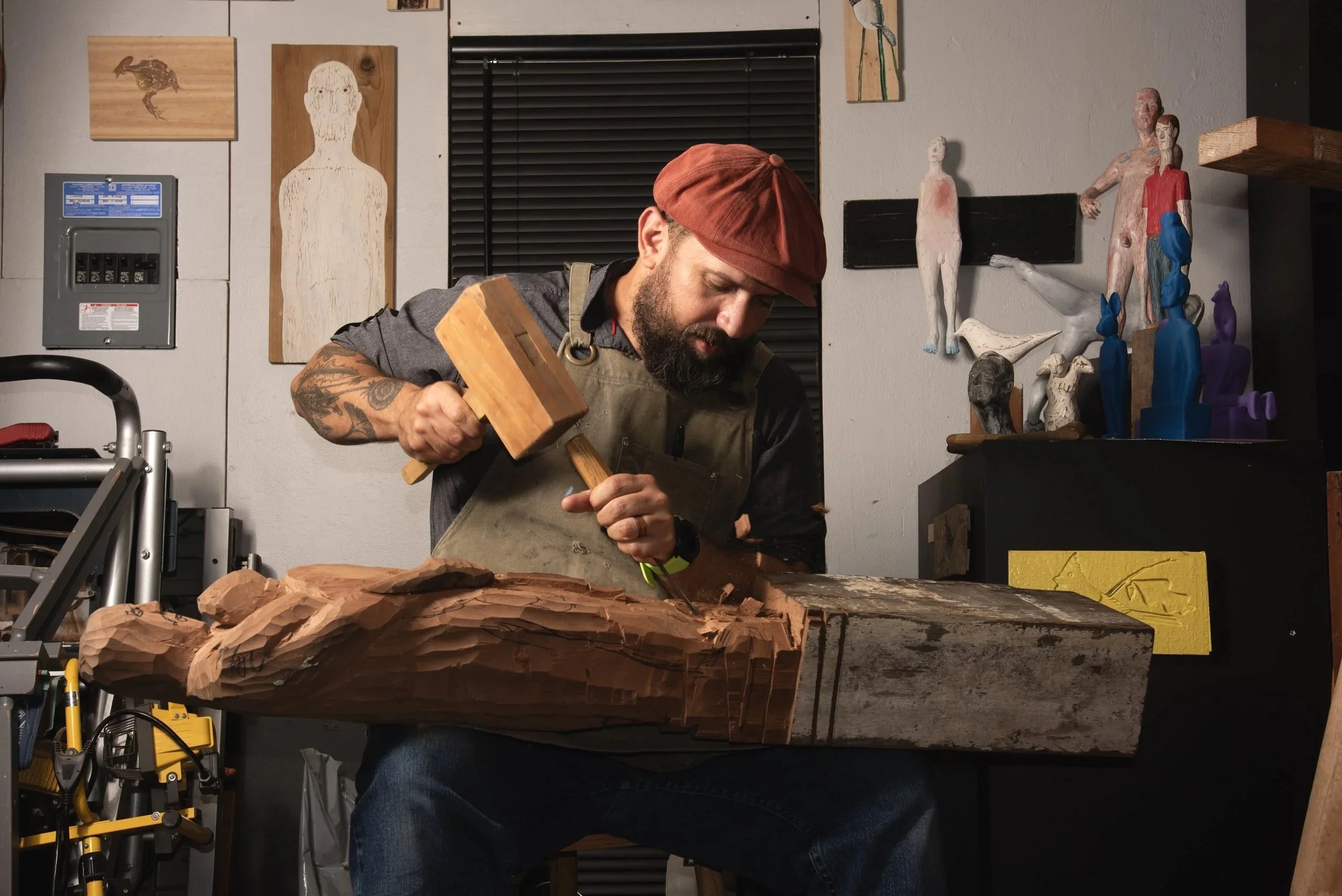
Christopher B. Wagner
Christopher B. Wagner brings sculptural presence and material intelligence into the Salon. Originally from Kentucky and now connected to Williamsburg through his work at William & Mary, Wagner is a sculptor whose practice is grounded in carving, reclaimed wood, animal forms, figuration, and the history embedded in materials.
His sculptures often feel like witnesses, companions, or guardians. They carry a handmade authority that is increasingly important in contemporary art. At a time when images circulate instantly and endlessly, Wagner’s work insists on slowness: the carved surface, the weight of wood, the trace of the hand, and the transformation of discarded or reclaimed material into presence.
The use of reclaimed wood is central to the meaning of the work. The material already has a life before it becomes sculpture. It carries marks, age, damage, use, and history. Wagner does not erase that history; he allows it to remain part of the finished object. In this way, his sculptures become both new forms and records of prior life.
Wagner’s work connects contemporary sculpture to craft, ecology, material memory, and the animal imagination. His carved forms are approachable, but not simple. They invite viewers through recognition, then hold attention through surface, structure, and emotional presence.
His sculpture belongs within conversations about material practice, contemporary craft, ecological reuse, and the continued relevance of hand-carved form. The work brings warmth, gravity, and character into a space while offering a direct encounter with transformation: wood becoming figure, memory becoming object.
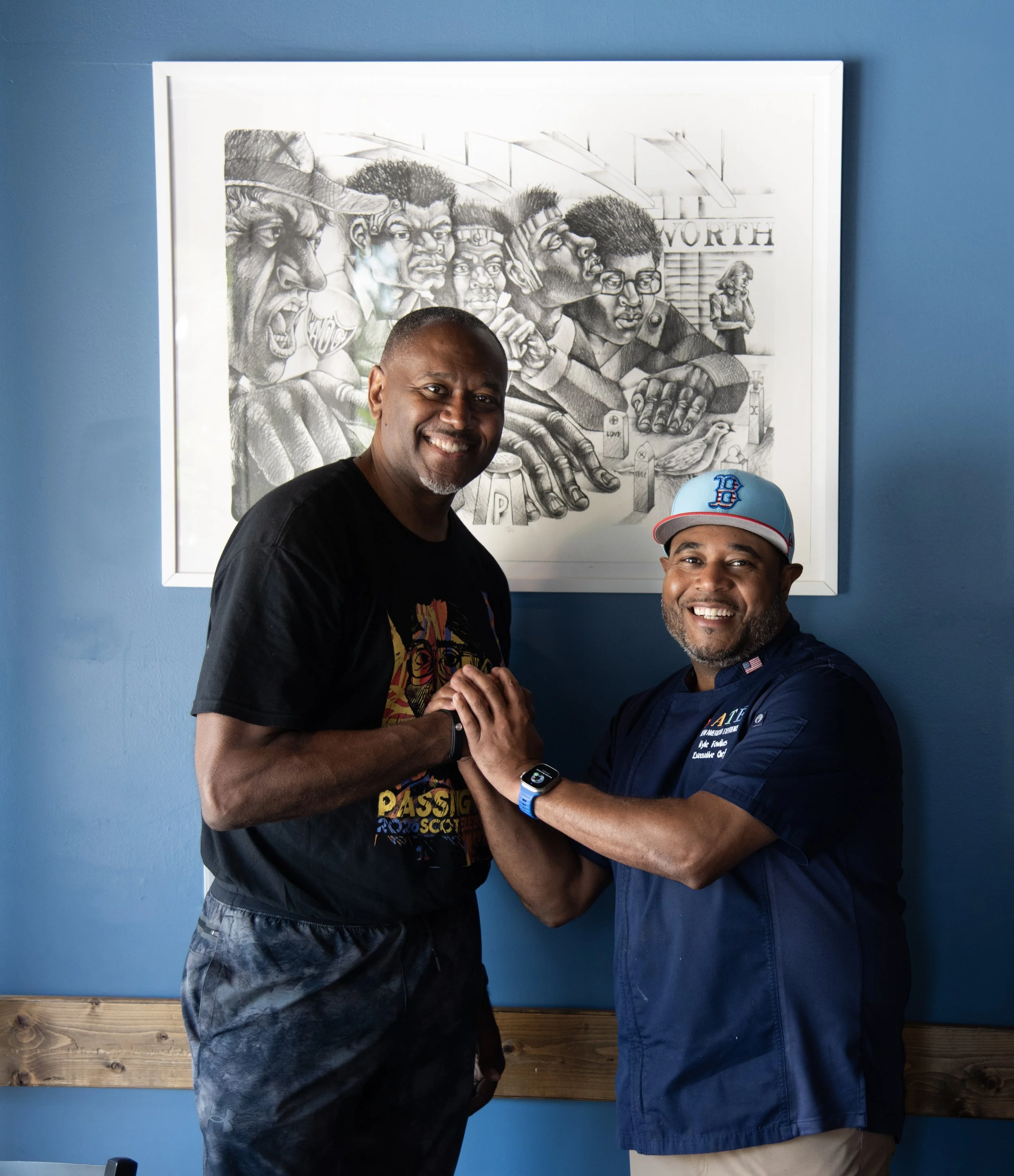
Art has the power to transform the spaces where we gather. We are honored to have the work of Steve Prince now on view at Saté: A New American Experience in Newport News. Prince’s work invites reflection, conversation, and community- qualities that are also at the heart of Chef Kyle Fowlkes’ vision for the restaurant. We look forward to sharing more about the work, the space, and future opportunities to experience Steve Prince’s art at Saté. Congratulations to Steve Prince and Chef Kyle Fowlkes on a wonderful collaboration.
Steve Prince at SATÉ: Art, Conversation, and Community
The questions raised by the Summer Salon continue beyond the gallery through selected works by Steve Prince at SATÉ: A New American Experience in Newport News. Prince’s work enters a setting where people gather, eat, converse, and share space. That context matters.
Prince is a New Orleans-born mixed-media artist, master printmaker, educator, lecturer, and community-centered cultural figure. He currently serves as Director of Engagement and Distinguished Artist in Residence at the Muscarelle Museum of Art at William & Mary. His work draws from printmaking, drawing, music, spirituality, Black Southern visual culture, migration, labor, ancestry, and communal repair.
Prince’s images are dense with movement, symbolism, rhythm, and history. They often carry the energy of procession: bodies gathered, figures moving, histories overlapping, and communities struggling toward renewal. His work is formally strong, but it is also deeply social. It asks what art can do in the world, not only as an object of contemplation, but as a catalyst for memory, dialogue, and healing.
At SATÉ, Prince’s work takes on another dimension. The restaurant is not a neutral white cube. It is a public gathering place. In that setting, the art becomes part of lived experience. Viewers may encounter it while dining, talking, celebrating, or simply passing through. This allows the work to operate in a way that is close to Prince’s larger commitments: art as a shared language, a communal act, and a space for reflection.
Prince’s work brings together formal rigor, historical consciousness, public engagement, and social meaning. It speaks to questions that museums, educators, and communities continue to address: faith, race, migration, education, collective memory, and repair.
His images carry visual force, symbolic depth, and cultural grounding, giving the work a presence that extends beyond the moment of first encounter. At SATÉ, that presence becomes part of a larger exchange among art, hospitality, conversation, and community.
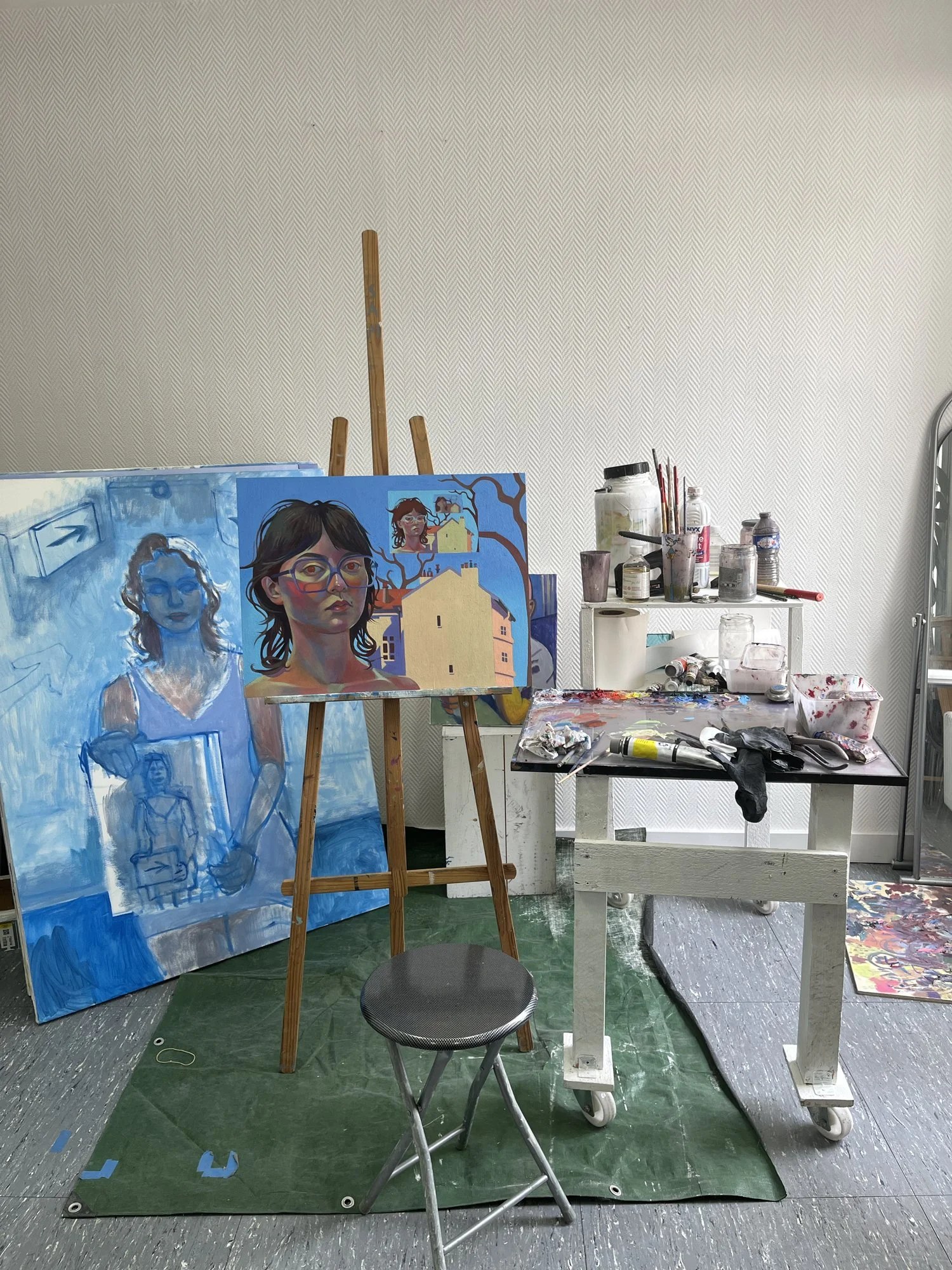
Rebecca Shkeyrov’s studio, Paris France
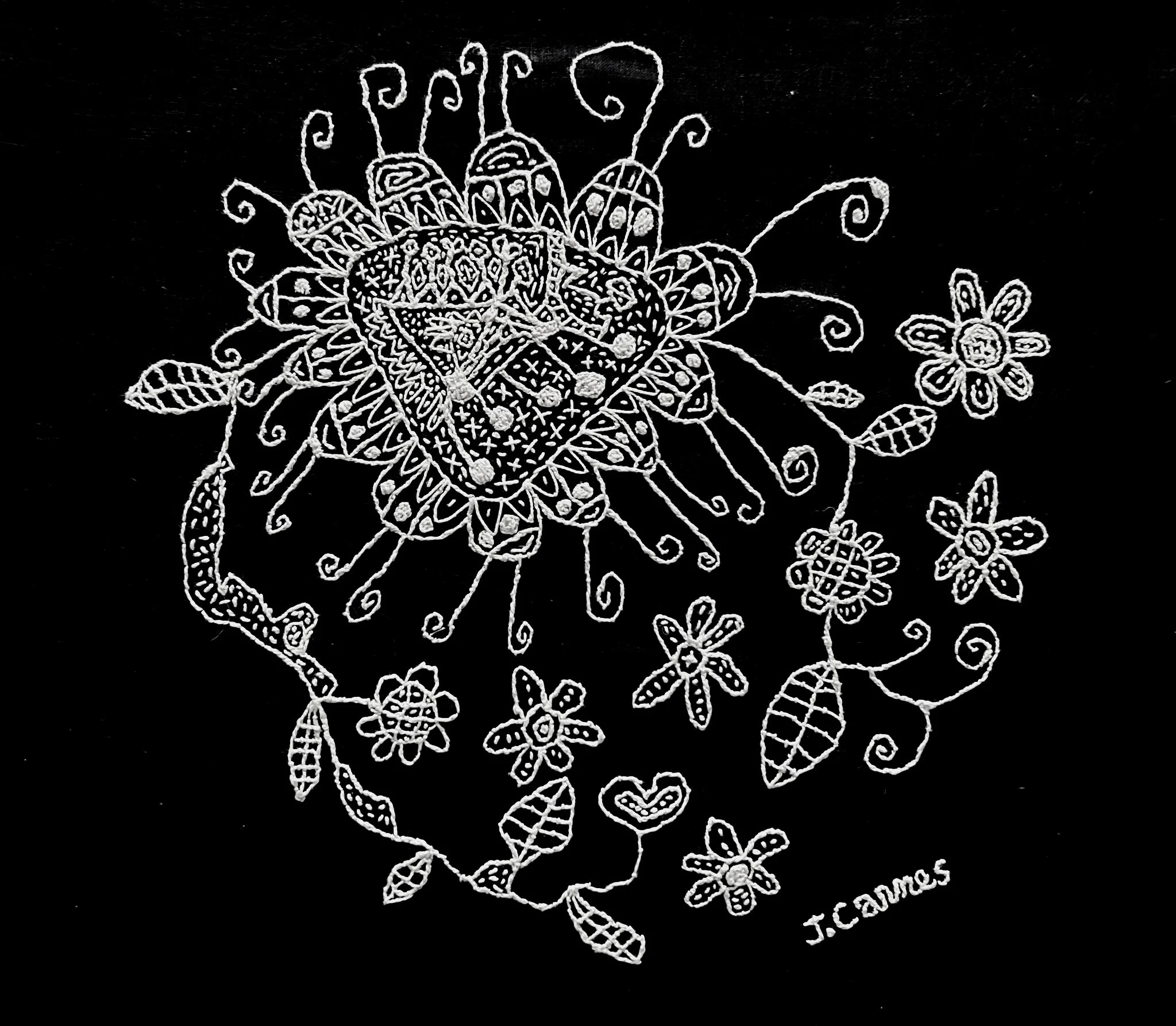
Jill Carnes
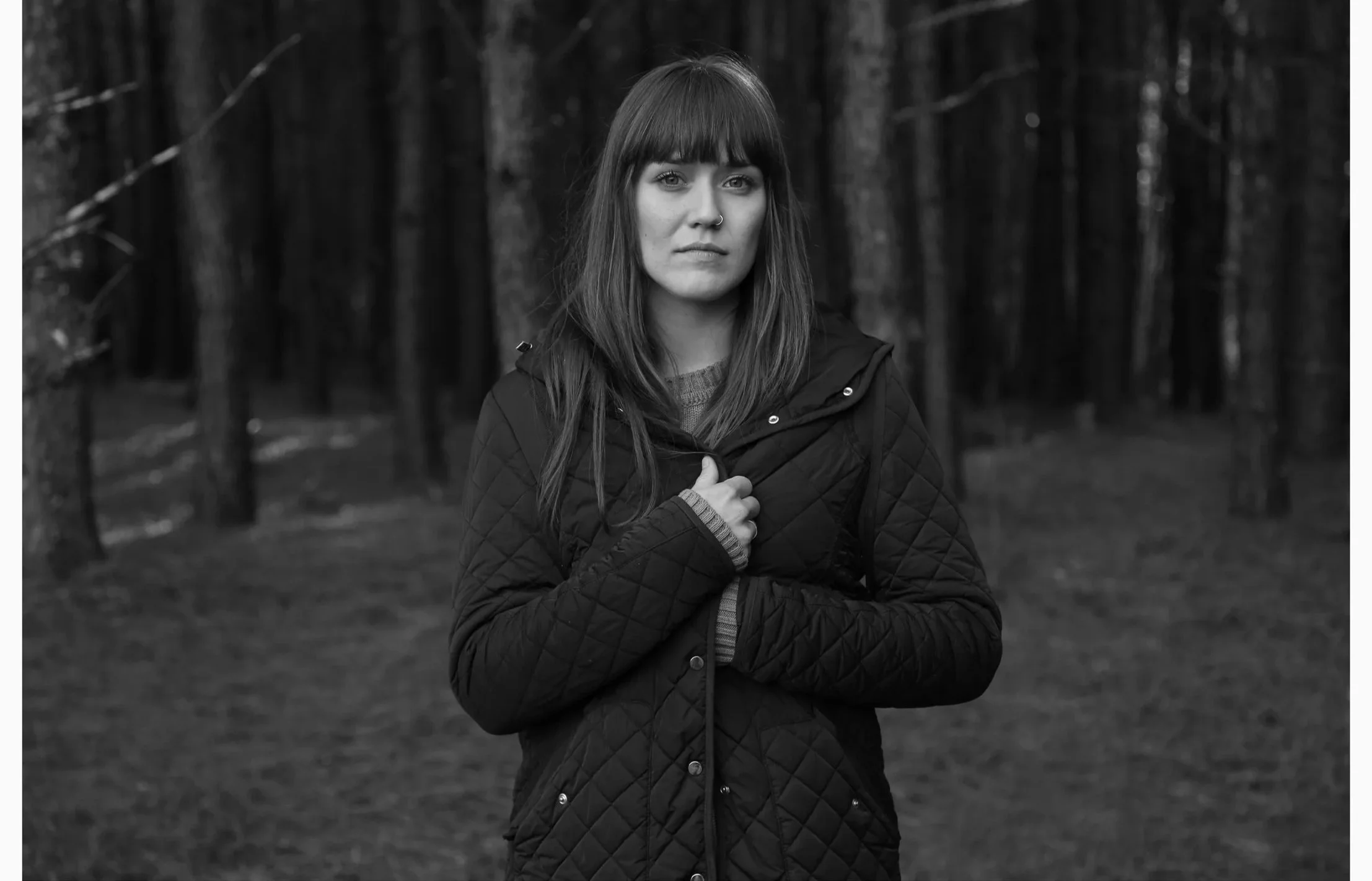
Ian McFarlane
A Salon of Memory, Image, and Encounter
Taken together, these artists create a Salon that is not limited by medium. Film, photography, painting, abstraction, mixed media, sculpture, installation, and memorial labor all become ways of asking how images and objects carry memory forward.
The Salon offers many points of entry while remaining grounded in Matney Gallery’s larger commitment to memory, visual culture, material presence, and public meaning.
This is not simply a gathering of individual works. It is a conversation about how art holds time, how private memory enters public life, and how artists help us see what might otherwise disappear.