
Elizabeth Mead and the Intellectual Life of the Matney Gallery
Exhibitions, Curatorial Inquiry, and Artistic Dialogue (2013–2022)
Over the past sixteen years, the Matney Gallery has developed through exhibitions that bring together artists, scholars, and students in an ongoing cultural dialogue. Among the figures who helped shape this environment, Elizabeth Mead—sculptor, Professor of Sculpture at William & Mary, and former Fellow of the Slade School of Fine Art in London—has played a particularly important role.
Through her own exhibitions as well as curatorial collaborations and mentorship, Mead helped establish the gallery as a place where artistic practice intersects with philosophical inquiry and institutional partnership. Her presence reflects the gallery’s broader mission: creating a space where contemporary studio practice is presented within a framework of scholarship, conversation, and cultural exchange.
Over time, these exhibitions helped establish an important dimension of the gallery’s identity. Rather than functioning only as a commercial exhibition space, the Matney Gallery developed as a site of artistic inquiry where artists, writers, and scholars could engage in sustained conversations about material, perception, and the cultural meaning of objects. Mead’s involvement in exhibitions such as Various Objects: Things on the Horizon, the curatorial project Matter, and her mentorship surrounding later exhibitions like Bodily Rhetoric helped shape this intellectual framework. Through these projects, the gallery became a place where studio practice and scholarly reflection intersect.
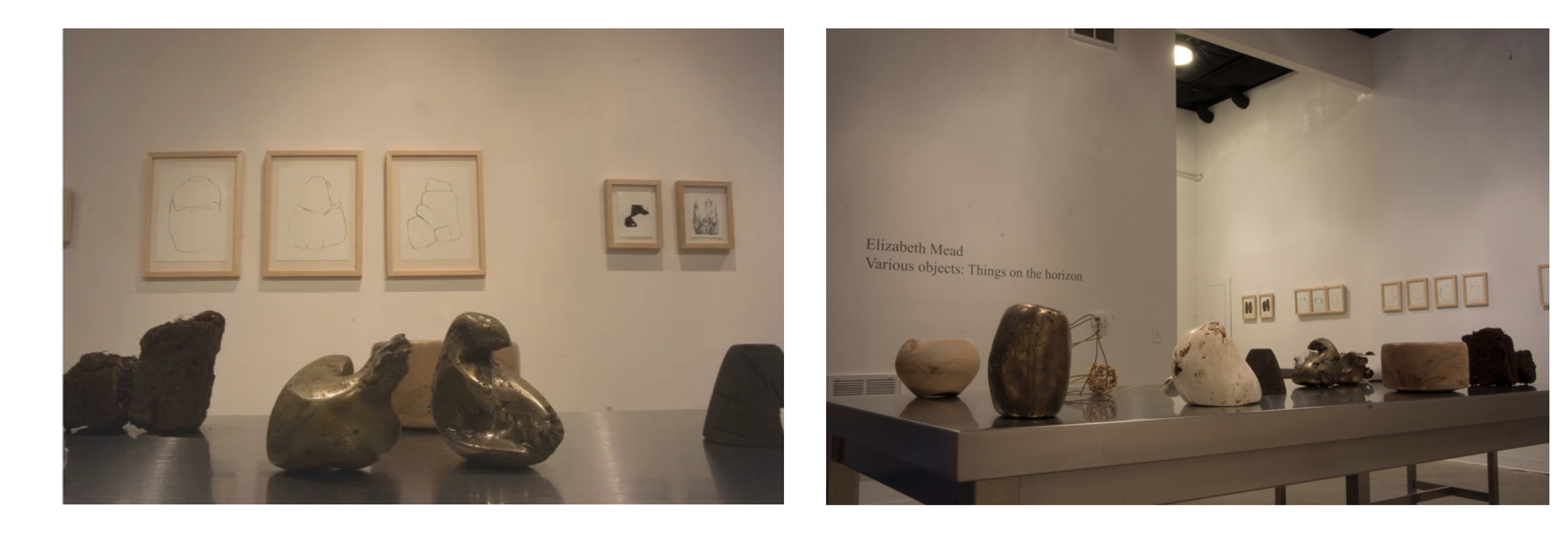
Installation views from Various Objects: Things on the Horizon, Matney Gallery, May 11 – July 26, 2013.
Various Objects: Things on the Horizon
Elizabeth Mead and Inklings (2013)
Elizabeth Mead first exhibited at the Linda Matney Gallery in 2013 with the solo exhibition Various Objects: Things on the Horizon (May 11 – July 26, 2013).
The exhibition presented a group of sculptures and drawings that explored the poetic potential of everyday materials. Mead’s practice often centers on modest structures and objects whose meaning unfolds gradually through sustained attention. In her statement for the exhibition, she emphasized the importance of the act of looking—suggesting that the works reveal themselves slowly, appearing at first “modest, somewhat quiet and often stubborn.”
The works assembled in Various Objects: Things on the Horizon created an environment in which sculptural fragments suggested larger narratives. Objects appeared as if they had been displaced from other contexts—remnants of architecture, theatrical devices, or artifacts that carry traces of memory.
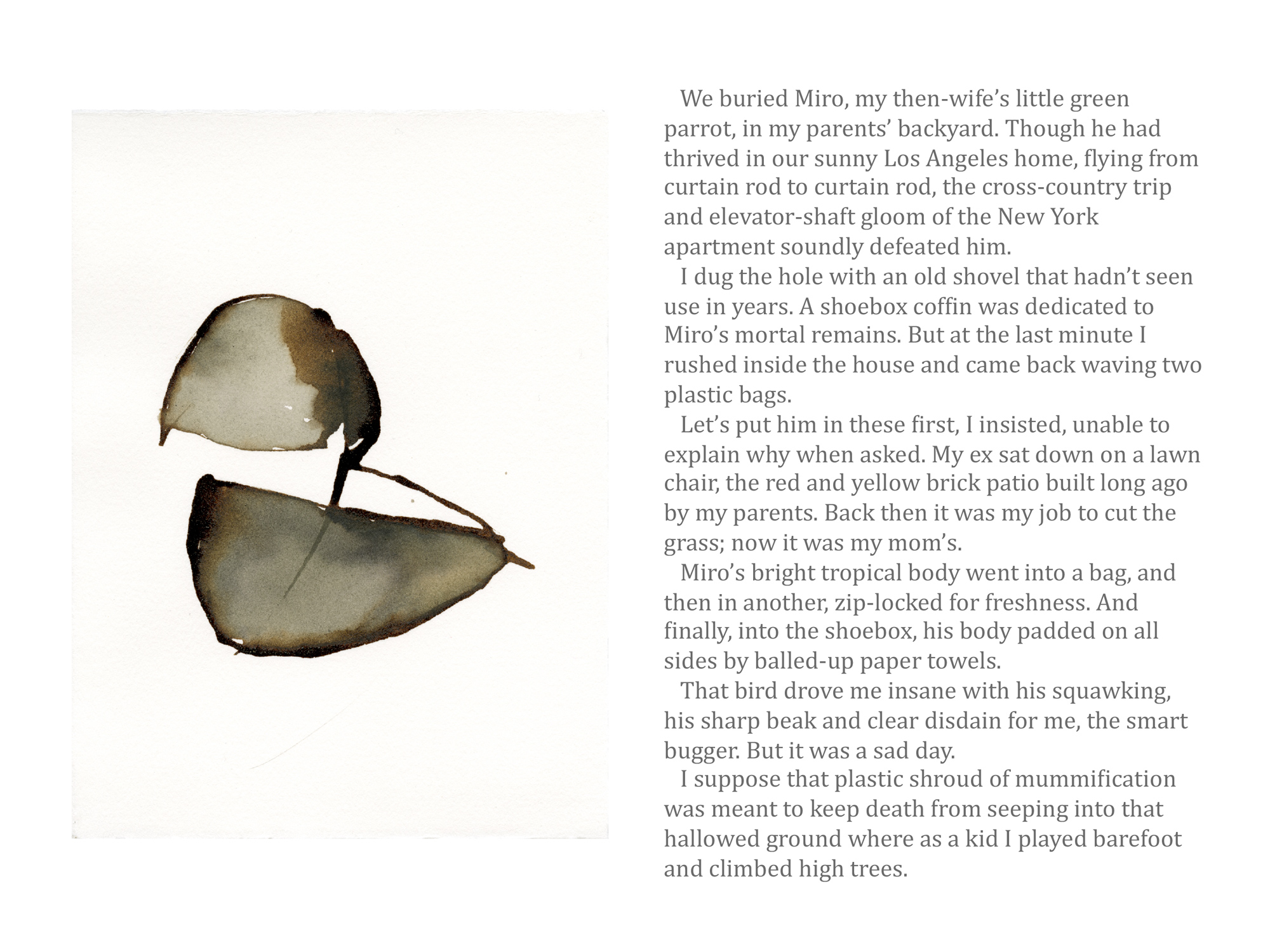
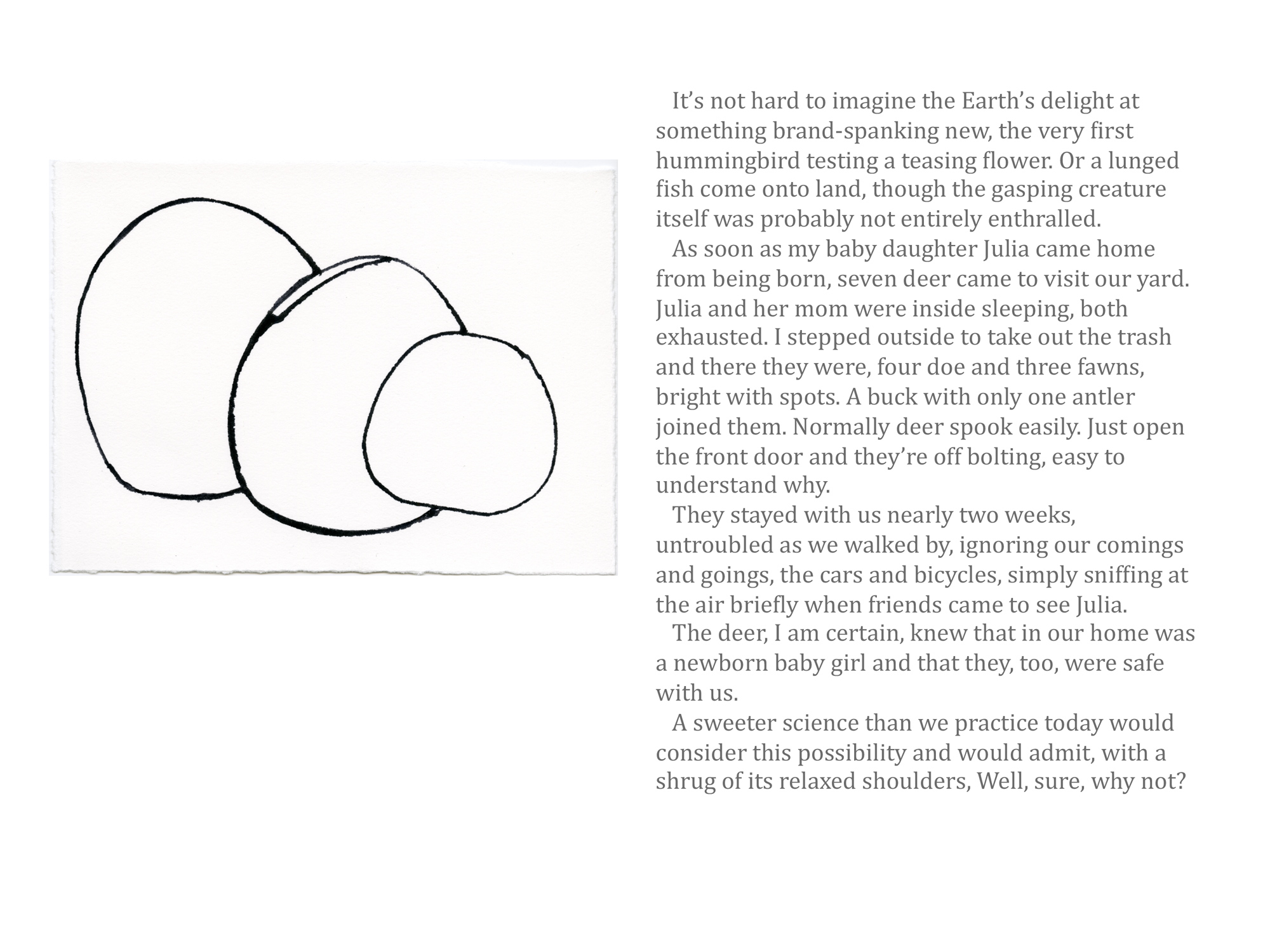
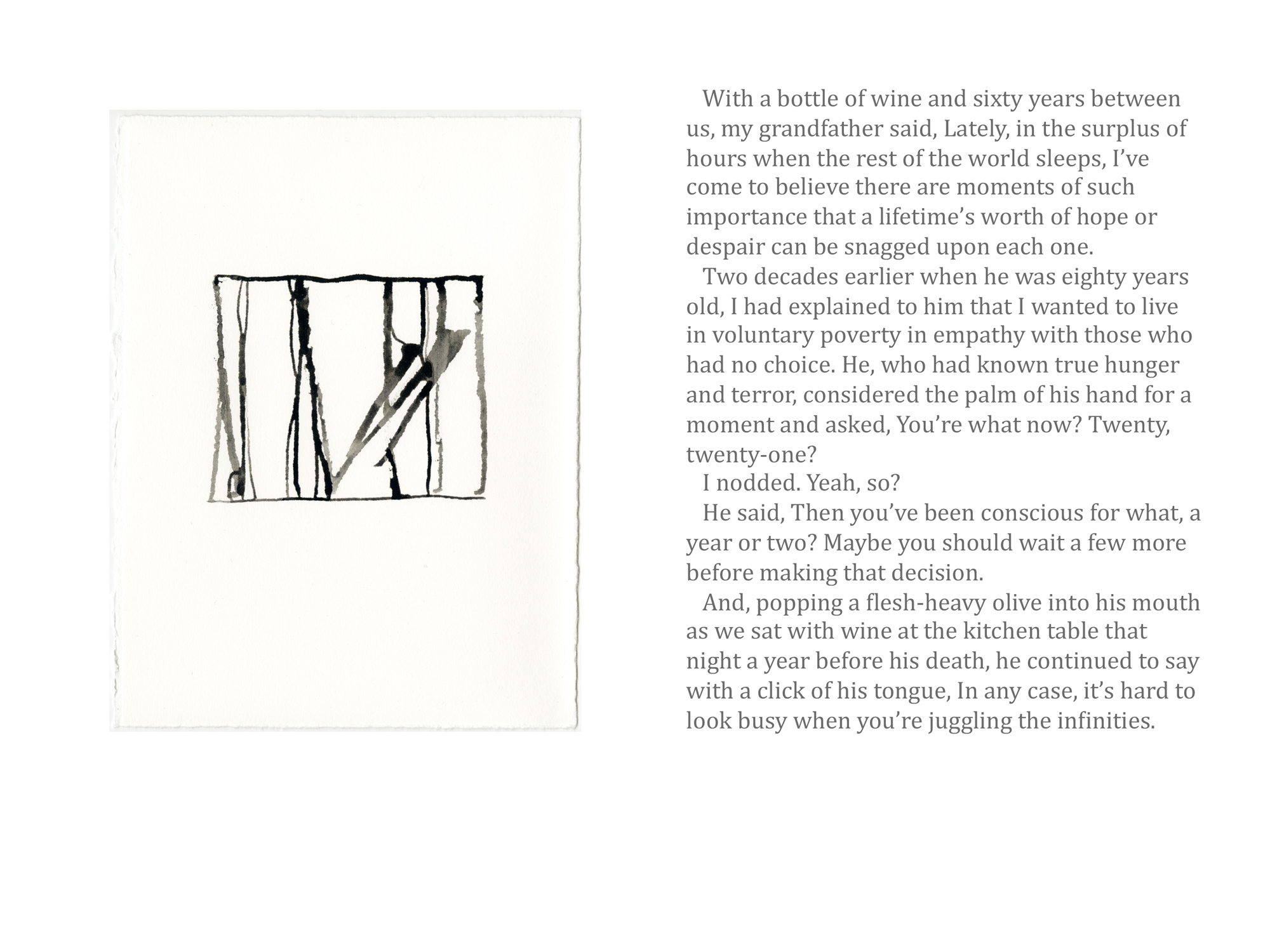
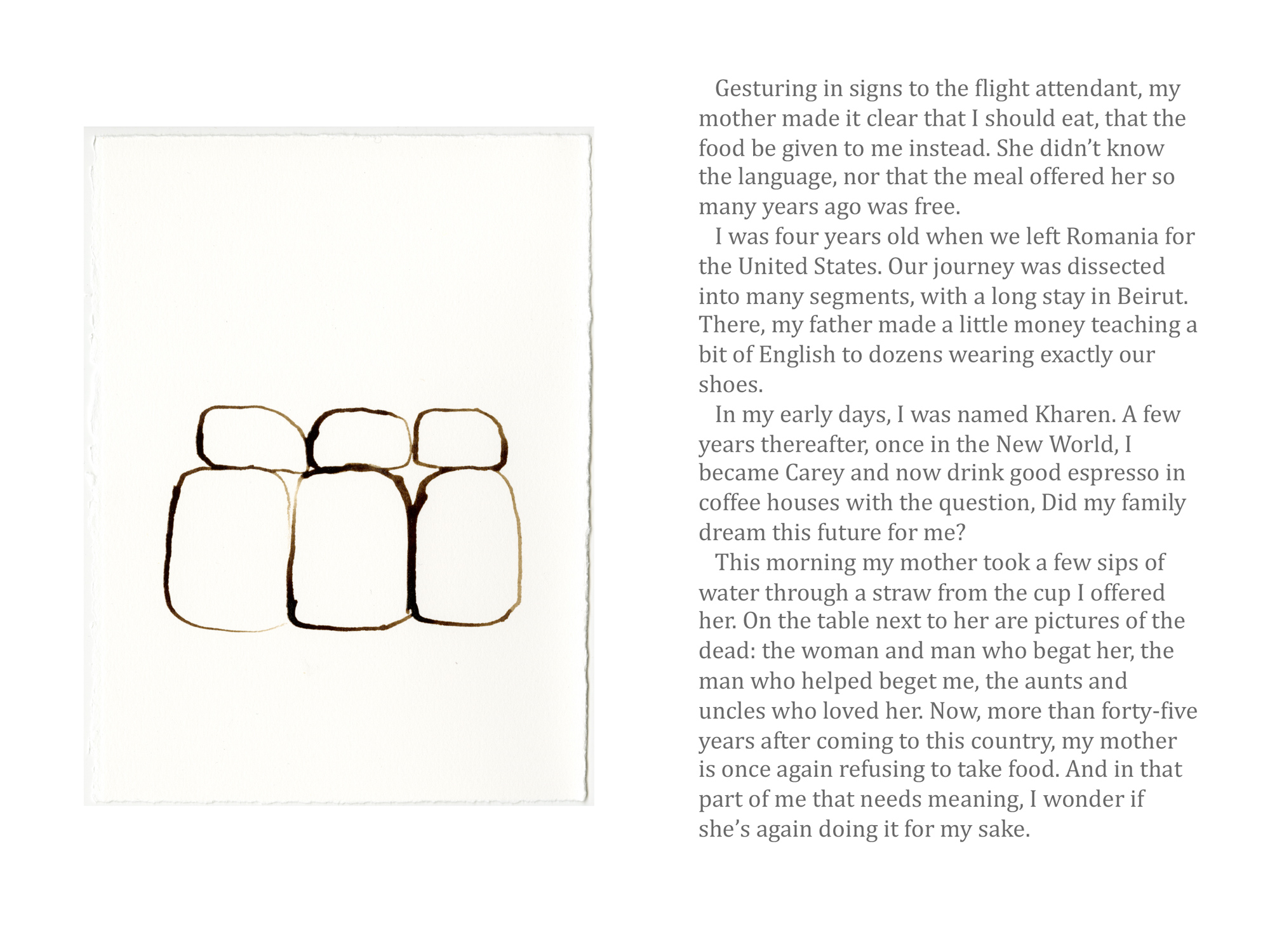
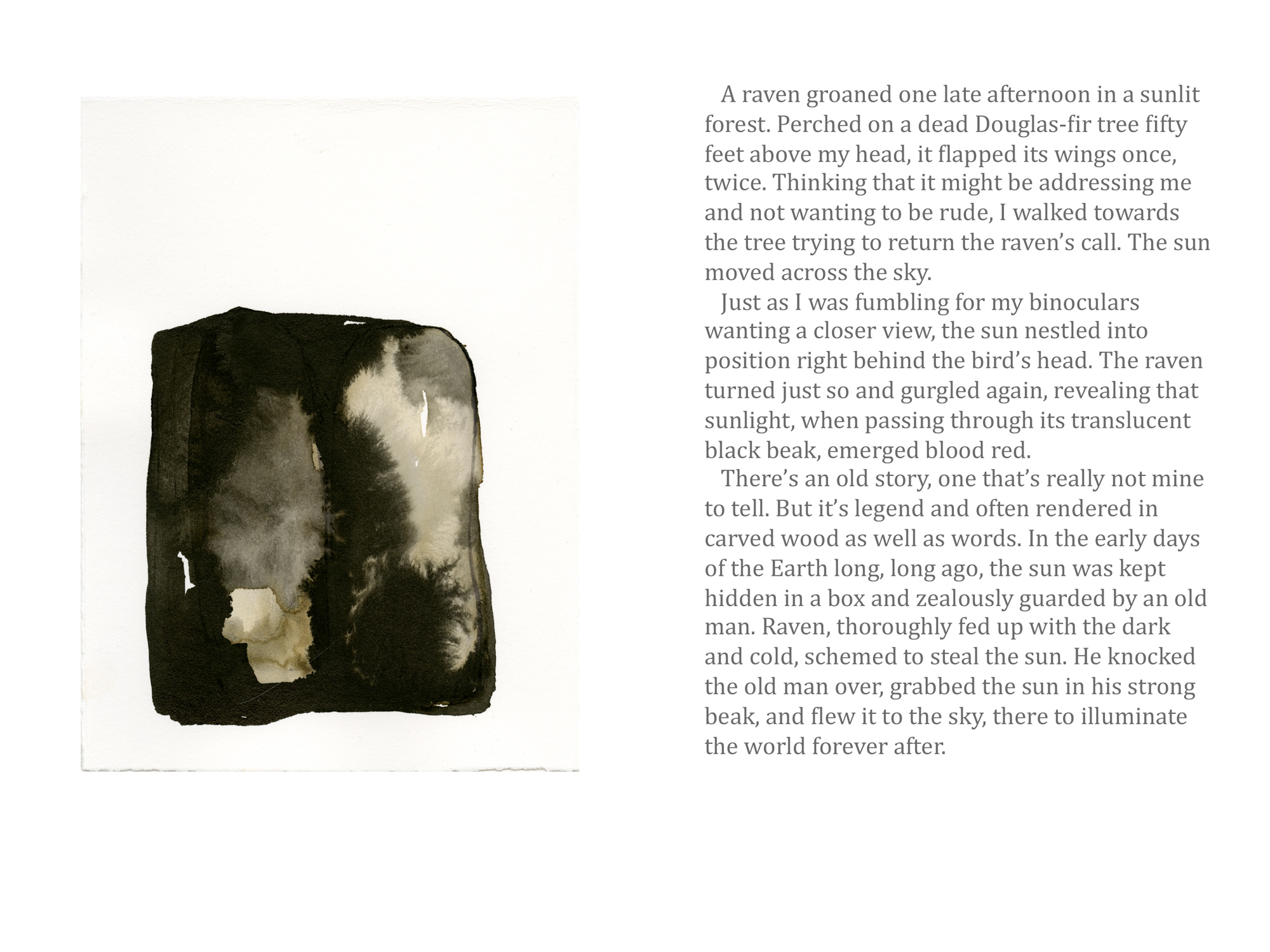
Running concurrently with the exhibition was Inklings, a collaborative project with writer Carey Bagdassarian. The series paired Bagdassarian’s poetic texts with Mead’s abstract ink drawings, presenting panels in which language and image unfolded together.
Rather than illustrating one another, the drawings and texts created an open field of interpretation. The result was a visual and literary dialogue that expanded the exhibition beyond sculpture alone, demonstrating Mead’s interest in interdisciplinary exchange.
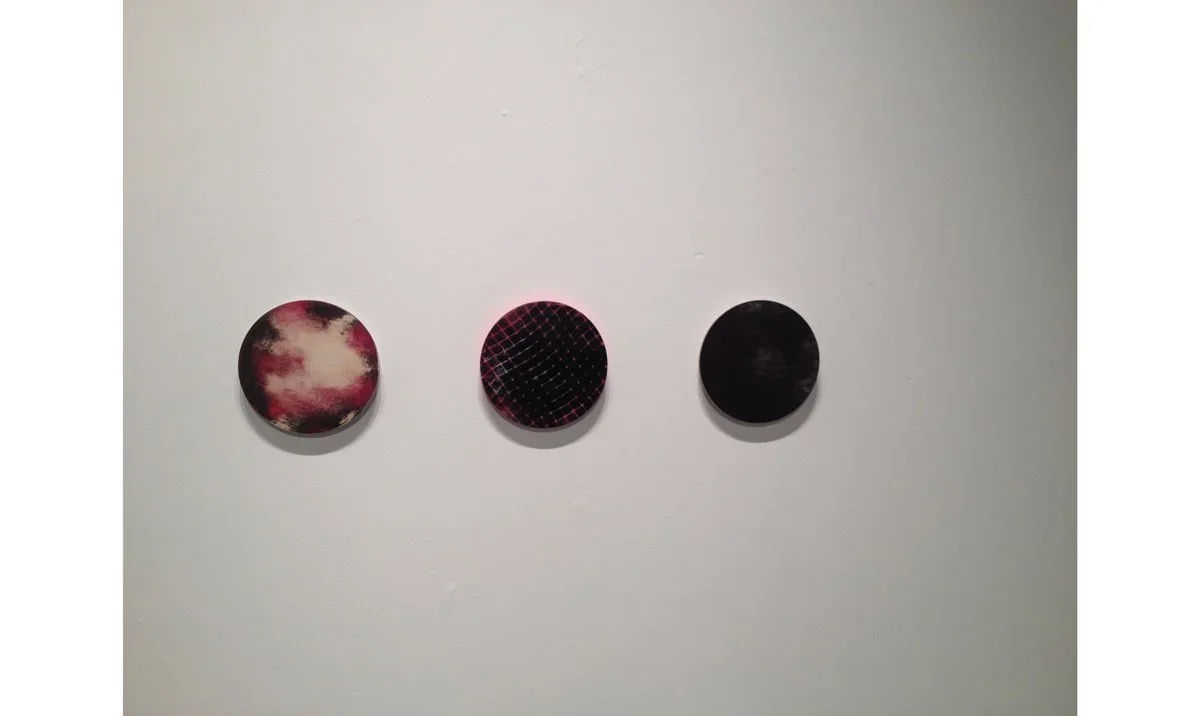
Installation views from New Works for the New World, Matney Gallery, September 19 – November 21, 2014.
Painting, Color, and Philosophical Inquiry
Jo Volley and Matter (2014)
In 2014, Mead’s involvement with the Matney Gallery expanded beyond her own work to include curatorial projects.
That fall the gallery presented New Works for the New World (September 19 – November 21, 2014), a solo exhibition by British painter Jo Volley. Volley’s paintings investigate the physical properties of paint—how pigment, light, and surface interact to create complex perceptual experiences.
Her work addresses the relationship between image and wall, allowing the painted surface to function as both representation and physical presence. The paintings operate as environments of color and gesture, encouraging viewers to consider painting as a spatial as well as visual phenomenon.
At the same time, the gallery presented Matter, a group exhibition curated by Elizabeth Mead.
The exhibition approached painting and sculpture through a philosophical lens, drawing inspiration from historical explorations of color and perception, including the writings of Johann Wolfgang von Goethe and Ludwig Wittgenstein. Through this framework, Mead positioned artistic practice as a form of inquiry—an exploration of how materials, perception, and thought interact.
By pairing Volley’s exhibition with the thematic structure of Matter, Mead expanded the gallery’s program into a broader conversation about materiality, color, and the philosophical dimensions of artistic practice.
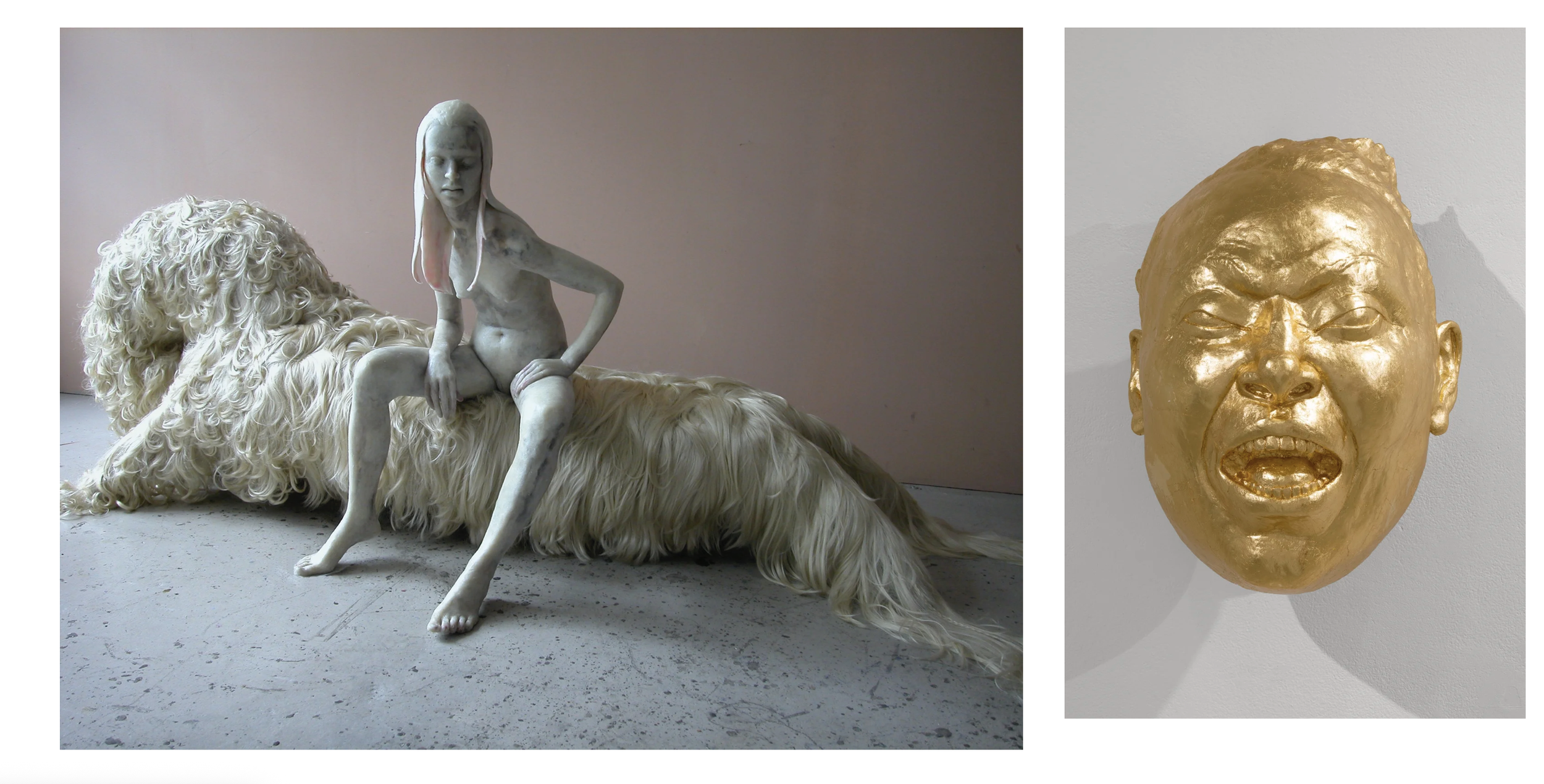
Laura Frazure, Stendhal (left) and Philadelphia (right), sculpture, 2020–2021. Exhibited in Bodily Rhetoric, Matney Gallery, 2022.
Bodily Rhetoric
Laura Frazure (2022)
In 2022, the Matney Gallery presented Bodily Rhetoric (October 8–30, 2022), a solo exhibition by sculptor Laura Frazure.
Frazure’s sculptures, many cast in translucent wax, explore representations of the female body in contemporary culture. Drawing from her background in anatomical study, she constructs figures and vessels that balance scientific observation with expressive transformation.
Works such as Stendhal (2021) and Philadelphia (2020) exemplify this approach. Their delicate surfaces and ambiguous forms evoke both vulnerability and resilience, allowing the material qualities of wax to convey the tension between bodily presence and cultural symbolism.
Elizabeth Mead’s mentorship of Frazure was acknowledged in the exhibition materials, reflecting the ongoing influence of Mead’s teaching and artistic practice. The exhibition also highlighted the connection between the gallery and William & Mary, where Mead’s role as an educator has shaped generations of artists.
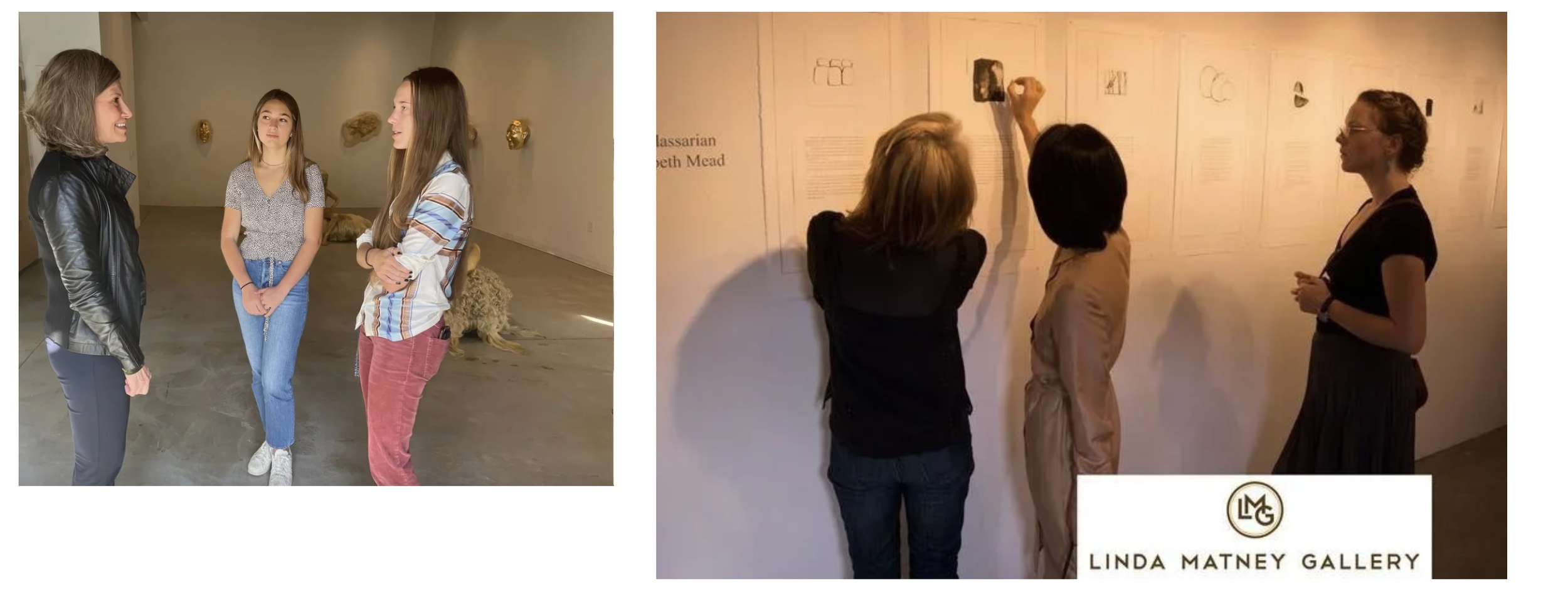
Collaborative exhibition development at Matney Gallery. Samantha Beirne with collaborators during work related to Bodily Rhetoric(2022), where she assisted with narrative development and outreach. In a second image, sculptor Elizabeth Mead with a colleague and student reviewing works from Inklings(2013), reflecting the gallery’s ongoing commitment to mentorship, curatorial collaboration, and dialogue between studio practice and academic research.
The exhibition also benefited from contributions by younger collaborators. Samantha Beirne, a designer and William & Mary student, assisted with research, narrative development, and outreach related to Bodily Rhetoric, illustrating the gallery’s commitment to mentorship and the cultivation of emerging voices.
Mentorship and Collaboration
Across these exhibitions—Various Objects: Things on the Horizon, New Works for the New World, Matter, and Bodily Rhetoric—Elizabeth Mead’s influence is visible not only through her own work but through the networks of artists and collaborators she helped bring into the gallery’s orbit.
Writers such as Carey Bagdassarian, painters such as Jo Volley, and sculptors such as Laura Frazure all participated in exhibitions shaped by this dialogue between studio practice and intellectual inquiry.
The exhibitions also reflect Mead’s role as a mentor and connector between the university and the broader artistic community. Through these collaborations, the gallery became a place where artists, writers, and students could encounter one another within a shared space of experimentation and reflection.
Legacy
Elizabeth Mead’s exhibitions and collaborations helped establish the Matney Gallery as a place where contemporary art is presented within a broader intellectual framework.
Her projects emphasized that exhibitions can function as sites of inquiry—moments when artists, writers, and audiences gather around questions about material, perception, and the cultural meaning of objects.
Through this work, Mead helped anchor the gallery as a space where art is not only viewed but also studied, discussed, and contextualized within larger philosophical and cultural conversations.